As foreign buyers retreat, a new generation of Singaporeans steps up
Affluent locals underpin stability in the private housing market, but a widening gulf between new launches and resale properties is reshaping the landscape
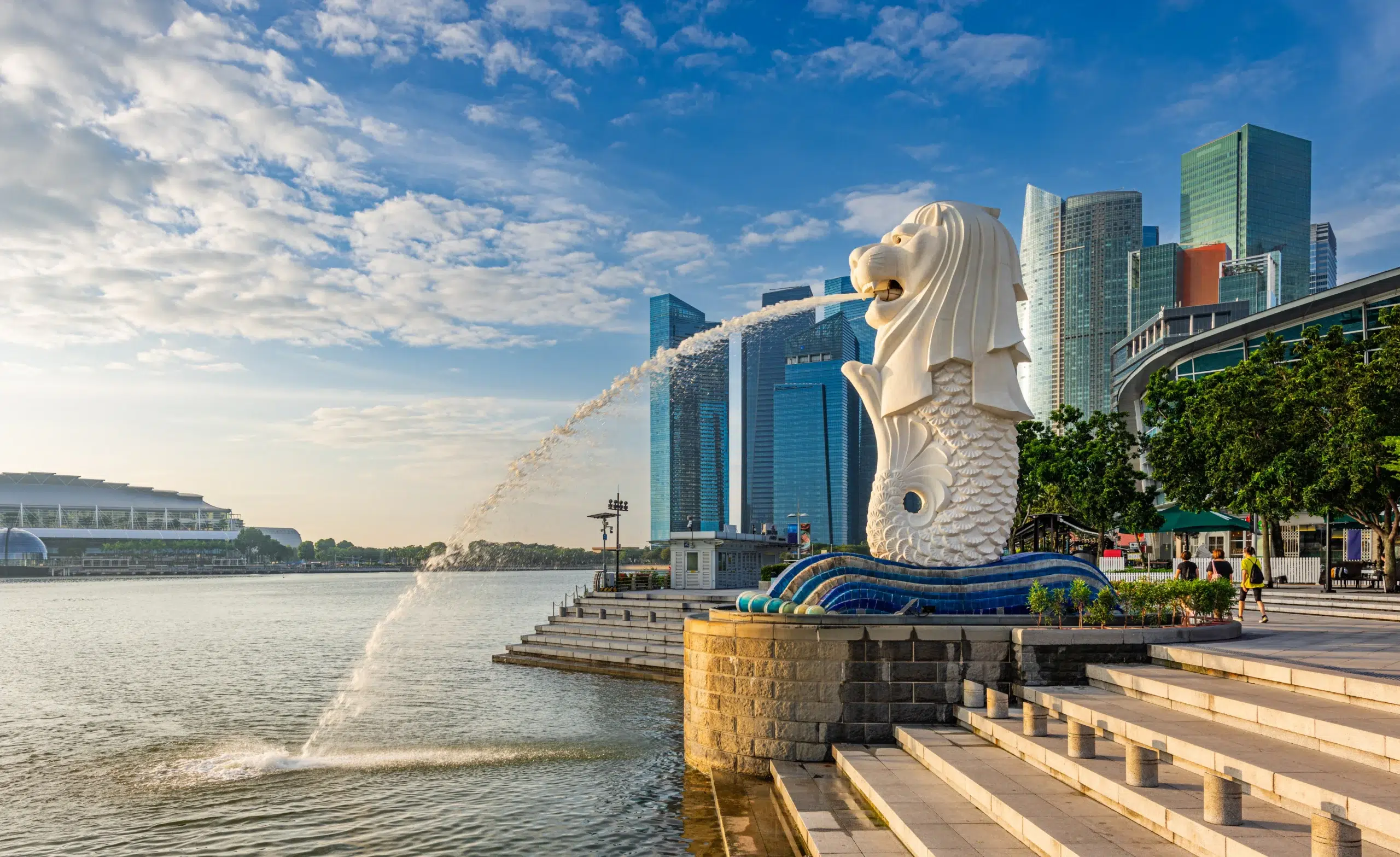
As missiles flew across the Strait of Hormuz in March, frenzied scenes unfolded at showflat launches by the Strait of Malacca.
That month, developer sales in Singapore—1,300 units, excluding executive condominiums—hit their highest March level since 2017, according to Knight Frank, which pointed to a homebuying public still hungry for new product despite geopolitical tensions.
Domestic wealth has powered the surge.
In Singapore’s tightly managed property market, local buyers have replaced foreign investors as the main growth engine. For years, the Core Central Region was dominated by deep-pocketed overseas buyers.
But foreign purchases have fallen sharply since the Additional Buyer’s Stamp Duty was raised to 60% in 2023.
In that vacuum, intergenerational wealth transfers are propping up demand. More than 60% of Singaporeans under 24 expect to inherit wealth, according to insurer Etiqa. Around 10% of households also report low debt, with assets concentrated in property and cash.
“Local wealth is now driving the luxury market, leading to a shift in preferred property attributes,” says Dr Nai Jia Lee, director of PropertyDoctors.
Where foreign investors once prioritised proximity to the CBD and MRT access for leasing, local buyers now favour larger units and access to reputable schools.
A growing gap between new and resale prices is becoming more pronounced.
Knight Frank’s analysis of URA Realis data shows median prices for new CCR sales in Q1 2026 stood at SGD3,174 per square foot, nearly 50% higher than resale units at SGD2,223. In the Rest of Central Region, new homes commanded a 37.7% premium; in the Outside Central Region, the gap widened to 61%. Knight Frank expects this divergence to persist.
“Well-located projects have drawn solid interest from local buyers fuelled by wealth accumulated over the past two generations,” says Leonard Tay, head of research at Knight Frank Singapore.
The OCR’s steady rise relative to the slower CCR reflects more than cyclical shifts.
“The OCR has benefited from sustained upgrader demand, supported by still-elevated HDB resale prices, improved connectivity from new MRT lines, and the emergence of integrated developments,” says Dr Lee.
As a result, the price gap between central and suburban locations has narrowed.
Roy Ling, chair of the PropertyGuru Asia Property Awards in Singapore, warns that external risks remain significant.
“A sustained disruption to Gulf energy flows would raise costs for businesses and households and slow growth, particularly for a city-state that imports almost everything and sits at the centre of regional trade,” he says. “If the shock leads to job losses or tighter credit, even disciplined launch management may not prevent price pressure.”
Unemployment remains low at around 2%, with citizen unemployment at 3%.
But sentiment is cautious. In a Q4 2025 survey for the National University of Singapore’s Real Estate Sentiment Index, 71% of respondents cited a global downturn as their main near-term risk. More than 90% of developers flagged rising land costs as a key concern, with confirmed list bids climbing from about SGD1,060 per square foot per plot ratio in 2019 to the mid-SGD1,400s by early 2026.
“The biggest challenge for 2026 is not overbuilding or excess credit,” says Ling, “but the risk that an externally driven slowdown undermines incomes at a time when price-to-income ratios are already stretched.”
Since 2019, non-landed home prices have grown at 5.5% to 5.7% annually, outpacing median household income growth of 3% to 4%. Parental support and investment gains have bridged the gap.
Singapore may still benefit from capital shifting away from more volatile markets. Total real estate investment sales rose 166.5% year-on-year to a record SGD15.4 billion in Q1 2026, according to Knight Frank.
“Amid rapidly shifting global conditions, assets with strong fundamentals may attract first-mover advantage,” says Galven Tan, CEO of Knight Frank Singapore.
Even so, longer-term structural risks are emerging. Nearly two-thirds of wealthy families fear their wealth will not last beyond one generation, while almost half cite difficulties in structuring transfers, according to Etiqa. These concerns point to deeper pressures from an ageing population and long-term climate risks.
Related: Tariffs and turmoil test Singapore homes as suburbs hold firm
“The most underreported challenges facing Singapore real estate are declining birth rates and climate change,” says Dr Lee.
With developer sales reaching 2,012 units in the first quarter, full-year new home sales are expected to reach between 8,000 and 10,000 units.
Ling expects price growth of around 2.5% to 4.5% in 2026. “The market is more likely to continue a slow, steady expansion than shift into a new growth phase or correction.”
The OCR is likely to lead to price growth through the end of the year, partly due to its lower base.
“The residential market should remain broadly stable, supported by strong household balance sheets, even as buyers remain sensitive to pricing and economic conditions,” says Dr Lee.
For investors seeking rapid gains, however, the outlook is less attractive.
“Singapore residential property is better suited to capital preservation and long-term stability than aggressive returns,” he adds.
Singapore’s property market is adjusting to life without foreign buyers. Whether it can do the same without a stable global economy will define its next phase.
This article was originally published on asiarealestatesummit.com. Write to our editors at [email protected].
Recommended
Opportunity or trap? What Washington’s high-tech hub outside Manila means for Philippine property
The New Clark City Economic Security Zone promises billions in investment, but at what cost to Philippine sovereignty?

What Japan’s policy rate hike means for its property market
After decades of near-free borrowing, the country's policy rate is starting to reshape the calculations behind property investment

A conversation with the head of Vietnam’s Green Building Council on the cost of doing nothing
The VGBC’s Douglas Snyder argues that the real cost developers should fear isn’t building green. It’s failing to do so

These 6 projects are among Asia’s greenest in 2026
Proof that better buildings are defined as much by how they operate as how they look