How Thailand aims to supercharge growth through infrastructure, tourism, and tech
But investors now want proof of execution
There is something almost heroic about the official prose of Thai economic policy.
Under Anutin Charnvirakul, Thailand’s third prime minister since August 2023, the state is to be remade through an “integrated strategic cluster system”, tourism upgraded into a “365-Day Destination”, and the bureaucracy propelled towards full “Government Digital Transformation”.
The language is expansive. What matters is whether any of it translates into better logistics, stronger destinations, and fewer of the old bottlenecks that weigh on investment.
For once, though, the rhetoric seems to be pointing towards something like a governing idea. Higher-value tourism, strategic clusters, digitalisation, and OECD accession are at least presented as parts of the same growth story, rather than as separate ministerial wish lists.
“There are clear positive signals,” says Martin Venzky-Stalling, senior adviser at Chiang Mai University Science and Technology Park and chair of the Joint Foreign Chambers of Commerce in Thailand’s Sustainable Development Committee. “The next step is translating that intent into more integrated execution across sectors.”
Thailand has rarely lacked plans. More often, it has lacked follow-through. If this administration wants to show that its talk of coordination, connectivity, and competitiveness amounts to more than another reshuffling of official priorities, the long-mooted Land Bridge could be the place to prove it.
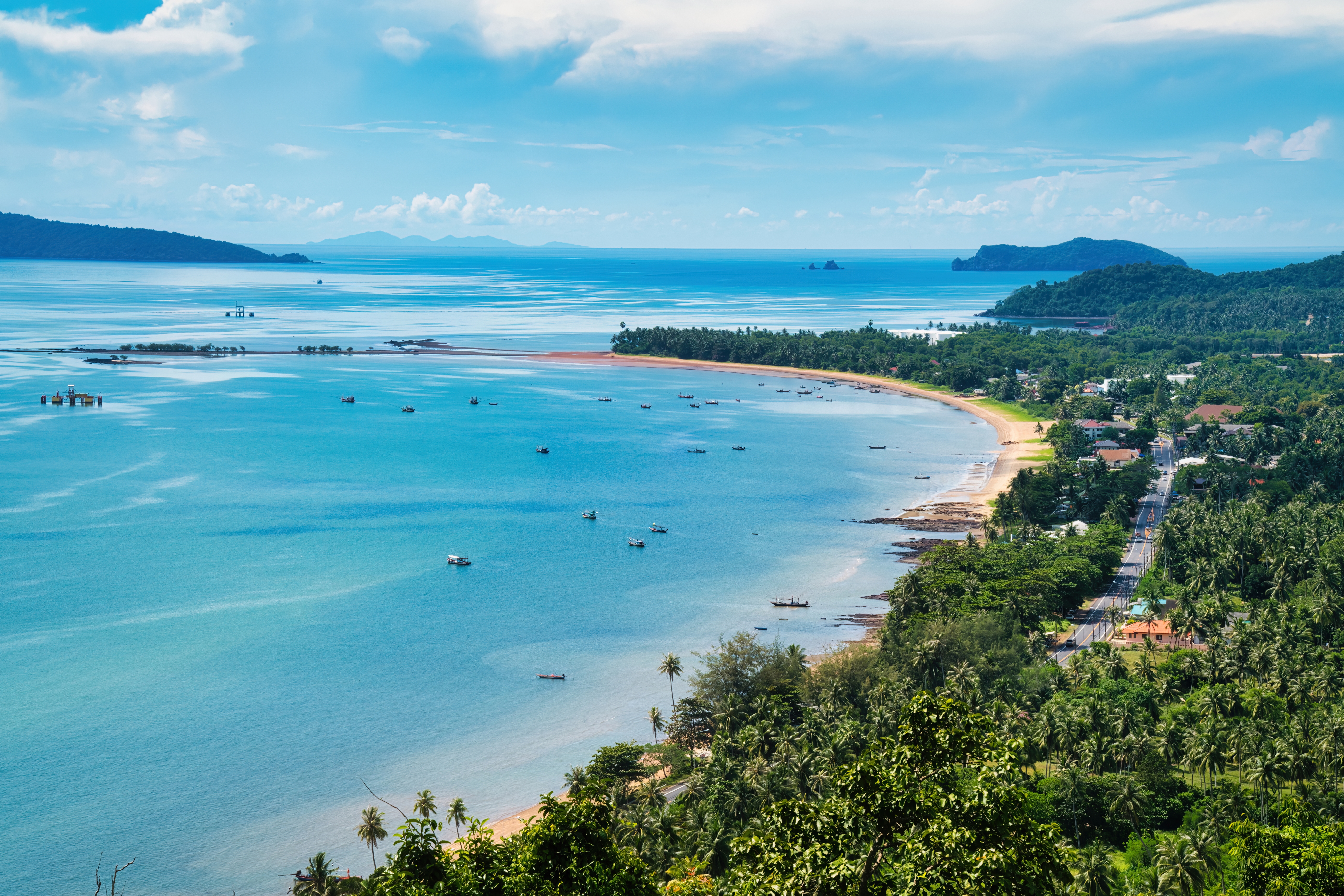
The roughly THB1-trillion (USD31 million) scheme aims to connect new deep-sea ports on the Gulf of Thailand and the Andaman Sea by road and rail across the southern peninsula, giving Thailand a larger logistics role between the Indian and Pacific oceans.
There are clear positive signals. The next step is translating that intent into more integrated execution across sectors
On paper, the appeal is obvious enough. For the government, it offers a flagship proof of strategic seriousness; for investors and developers, it suggests new industrial corridors, logistics-linked land, and a more credible long-term story around transport and trade.
But the project is also one of the country’s most contested infrastructure bets. Public hearings and environmental and health impact work have been incomplete, residents have pushed back, and critics warn that the scheme could damage fragile marine ecosystems and threaten the tourism and fishing economies that already sustain parts of the South.
That cuts to the heart of the government’s wider growth pitch. If Thailand wants to present infrastructure, tourism, and investment as parts of a single, higher-value strategy, it cannot afford to treat environmental risk, destination quality, and local livelihoods as secondary concerns.
“Thailand has made good progress on national connectivity, but the next focus will need to be destination-level infrastructure—areas like water, waste, drainage, and climate resilience,” says Venzky-Stalling.
That is where the neatness of the official strategy starts to fray. In places such as Phuket, Samui, and Pattaya, the strain is not hard to spot: destinations that generate outsized economic value but still struggle with the systems needed to support the load. For tourism-led property markets, that is more than a municipal headache. It affects destination quality, operating costs, investor confidence, and, ultimately, long-term asset value.
The government’s tourism pitch is, in principle, the right one. Wellness, MICE, community-based tourism, and year-round demand all make more sense than another blunt pursuit of arrival numbers. For hospitality assets, mixed-use schemes and destination-led development, the logic is easy enough to grasp: a higher-spending, better-distributed visitor economy ought to support stronger pricing, more resilient demand and better-quality growth.
The difficulty is that higher-value tourism still depends on things Thailand has long struggled to provide consistently: functioning local infrastructure, stronger destination management, better coordination between national and local agencies, and sufficient regulatory and operational capacity on the ground to prevent growth from degrading the very places meant to benefit from it.
That tension has not stopped investors from leaning into the premium end of the market. In its latest 2026 outlook, CBRE says Thailand remains well placed to attract higher-spending demand in medical, wellness, and MICE travel, while Bangkok alone is expected to add more than 4,300 hotel keys this year, mainly in the upscale and luxury segments.
Despite the influx of new rooms, CBRE still expects occupancy to rise by up to two percentage points and revenue per available room to increase by 3-4%. That suggests investors remain willing to back the higher-value tourism story, even as the public infrastructure and systems needed to support it remain uneven.
The wider infrastructure-led investment case is similarly mixed. CBRE still sees industrial land as one of the market’s stronger lines, with another active year expected for land sales, rising demand for ready-built factories, and vacancy rates below 5% likely to persist.
As Chotika Tungsirisurp, head of consulting and research at CBRE Thailand, notes, “Regional trade growth will encourage more companies to relocate to Southeast Asian countries, including Thailand.”
That should support industrial estates, secondary manufacturing clusters, and logistics-linked development. Even so, the outlook is not uniformly positive: in modern logistics property, CBRE expects new supply to outpace demand in 2026, pushing vacancy from 10-13%.
Still, roads, ports, and industrial land are only part of the investment case. If the government wants Thailand to feel easier to trust and easier to move through, its digital-state and anti-fraud agenda matters too.
“A serious response to online fraud must move beyond enforcement and awareness toward redesigning the ‘infrastructure of trust’ in the digital economy,” says Dr Saliltorn Thongmeensuk, senior research fellow at the Thailand Development Research Institute.
Related: Allan Zeman on Phuket’s luxury evolution and the vision behind Sudara
Thailand has begun to move beyond a purely law-enforcement response. Shared responsibility now extends across banks, telecom operators, digital asset providers, and platforms. Yet much of the framework still has the feel of crisis management rather than settled institutional design.
As Saliltorn puts it, Thailand “has not yet fully crossed from reactive governance to strategic digital-state design”.
That matters for property more than it may first appear. Digital trust affects transaction confidence, day-to-day business operations, and the practical mechanics of due diligence, payments, and financing.
The state’s own digital plumbing is becoming part of that picture.
The Land Department’s DOL e-Service platform already offers online access to functions including appraised-value certificates, collateral checks, and land-registration records, while the Bank of Thailand’s wider digital ID push aims to make verification and onboarding more reliable across financial services.
Digital infrastructure is becoming a property story too. Google’s planned data centre and cloud investment in Bangkok and Chonburi, together with a wider wave of BOI-approved data-centre projects, points to growing demand for power-secure, utility-ready industrial land: exactly the sort of asset Thailand is trying to attract more aggressively.
For Saliltorn, the real tests are the speed of intervention, the recovery of funds, and the predictability and fairness of enforcement for compliant firms. Here too, the issue is less whether the policy sounds modern than whether the systems behind it work.
That leaves Thailand under Anutin looking neither like a clean break nor a mere patchwork. The agenda is more coherent on paper than some recent governments have managed.
But the real estate and investment case will depend less on the grandeur of the slogans than on whether local infrastructure, institutional coordination, and digital trust improve in ways the market can feel.
This article was originally published on asiarealestatesummit.com. Write to our editors at [email protected].
Recommended

How Thailand aims to supercharge growth through infrastructure, tourism, and tech
But investors now want proof of execution
6 of Southeast Asia’s finest integrated districts
Master-planned townships are re-emerging as a practical response to rapid urbanisation
6 award-winning projects bringing resort living to the city
Resort residences are increasingly focused on year-round use in urban destinations

How China became the testing ground for Zaha Hadid Architects’ boldest ideas
A conversation with associate director Shao-wei Huang on architecture without precedent