6 of Southeast Asia’s finest integrated districts
Master-planned townships are re-emerging as a practical response to rapid urbanisation across the region
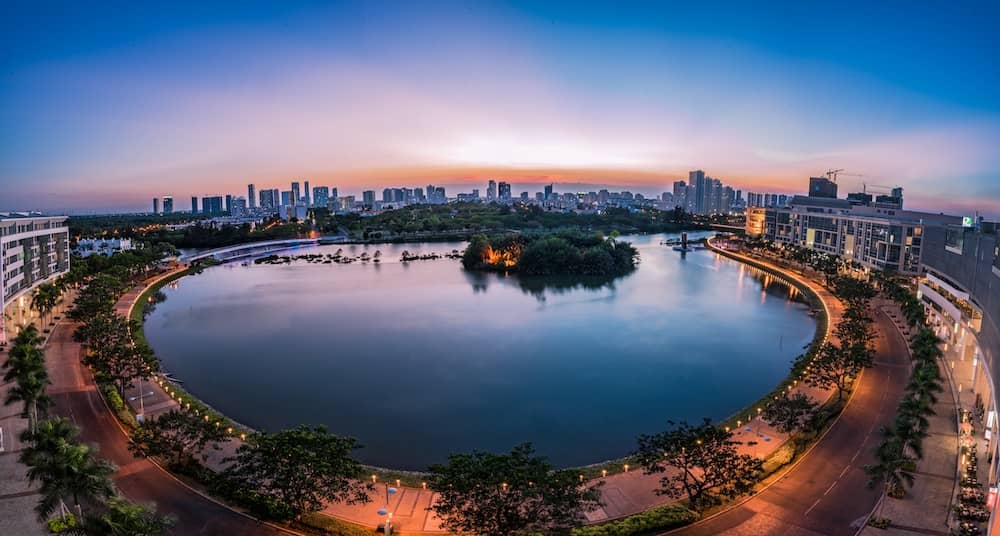
It’s early evening, and Phu My Hung’s Canh Doi Park is filling up. Families arrive with children in tow. Others make for the nearby malls. Along Nguyen Van Linh Boulevard, rush-hour traffic inches toward the bridges and back into Ho Chi Minh City’s chaotic centre.
Half a world away, in Letchworth Garden City on a damp morning, commuters trudge past manicured hedges and red-brick cottages toward the train station, likely bound for London. The scene is unremarkable—if not a tad twee—in the way commuter towns are. A century ago, it was anything but. Conceived as the “world’s first garden city”, Letchworth was intended as proof that urban growth could be organised differently. Its planners sought to counter the crush of industrial Britain’s cities by integrating homes, employment, green space, and civic institutions within planned settlements.
The idea returned after the Second World War, sparking a wave of new towns around London that carried the vision into the next era. Today, however, that masterplan model is most visible in the major cities of developing countries, where it has become a practical means of managing rapid urban growth.
This was the backdrop for Phu My Hung, launched in the 1990s as part of the Saigon South plan. What was once low-lying land south of the old city became a new district, built from scratch. Nguyen Van Linh Boulevard came first, then the towers, schools, shops, and public spaces. The area is now home to tens of thousands of residents. But as it matures, the pressures are familiar—affordability, traffic, the steady need for upgrades—yet the original sequencing is still visible in the street grid and the order of its growth.
Now, Ho Chi Minh City is preparing to expand again. Proposals to push development further south and east—including large-scale riverfront and coastal extensions—are already underway. Similar initiatives can be seen in other major cities across the region, from Manila Bay’s reclamation projects to new mass transit corridors in Bangkok.
Related: Why cities plan for decades but finance only for years
With populations rising and infrastructure stretched, cities are choosing to plan entire districts rather than letting growth unfold piecemeal—a response to the sheer scale of expansion. The United Nations’ ESCAP projects that Southeast Asia’s urban land will double between 2010 and 2050.
“Urban centres continue to be dynamic hubs of economic growth for the region. However, this growth is not equally distributed,” writes Armida Salsiah Alisjahbana, under-secretary-general of the UN and executive secretary of ESCAP. She adds that, without careful land discipline, expansion risks tipping into subsidence, congestion, and unplanned sprawl. “Growth needs to be balanced with sustainable land-use management.”
Land discipline is ultimately about order and timing. Major roads and transit links are laid down early, and utilities are designed for density rather than added later in fragments that burden growing cities. Schools, healthcare, and retail open alongside the first residents, allowing a district to function from the outset. Without that sequencing, new neighbourhoods risk inheriting the congestion they were meant to relieve.
Moreover, the margin for error in masterplanned developments has narrowed in recent years. After monetary tightening in Southeast Asia between 2022 and 2024, borrowing costs are well above pre-pandemic lows. That has changed how both developers and buyers assess township-scale projects.
Township building is no longer a side project at the edge of the city; it is becoming a default way Southeast Asian cities take on new growth
“There is a clear shift toward completed ecosystems over speculative future gains,” says Christine Li, head of research for Asia-Pacific at Knight Frank. “When borrowing costs were lower, buyers were willing to wait for masterplans to materialise. Today, the cost of holding an unfinished promise is much higher.”
She adds that size alone also doesn’t mean a project will last. Projects that put in roads and services before the homes, keep prices within reach, and bring in transport and essential amenities early on are much more likely to succeed. Those who delay connectivity or rely on distant phases find buyers less forgiving. “If residents reach jobs via transit and access services near their homes, the township stays relevant,” Li says. “Projects remaining car-dependent or delaying amenities will lose momentum. Buyers will gravitate toward developments that solve the affordability equation today.”
In a region where urban land is set to double in a generation, that distinction matters. Township building is no longer a side project at the edge of the city; it is becoming a default way Southeast Asian cities take on new growth.
The following townships show how developers are trying to strike that balance on the ground, and where the line now falls between a working district and a costly promise.
Kota Baru Parahyangan | West Java, Indonesia
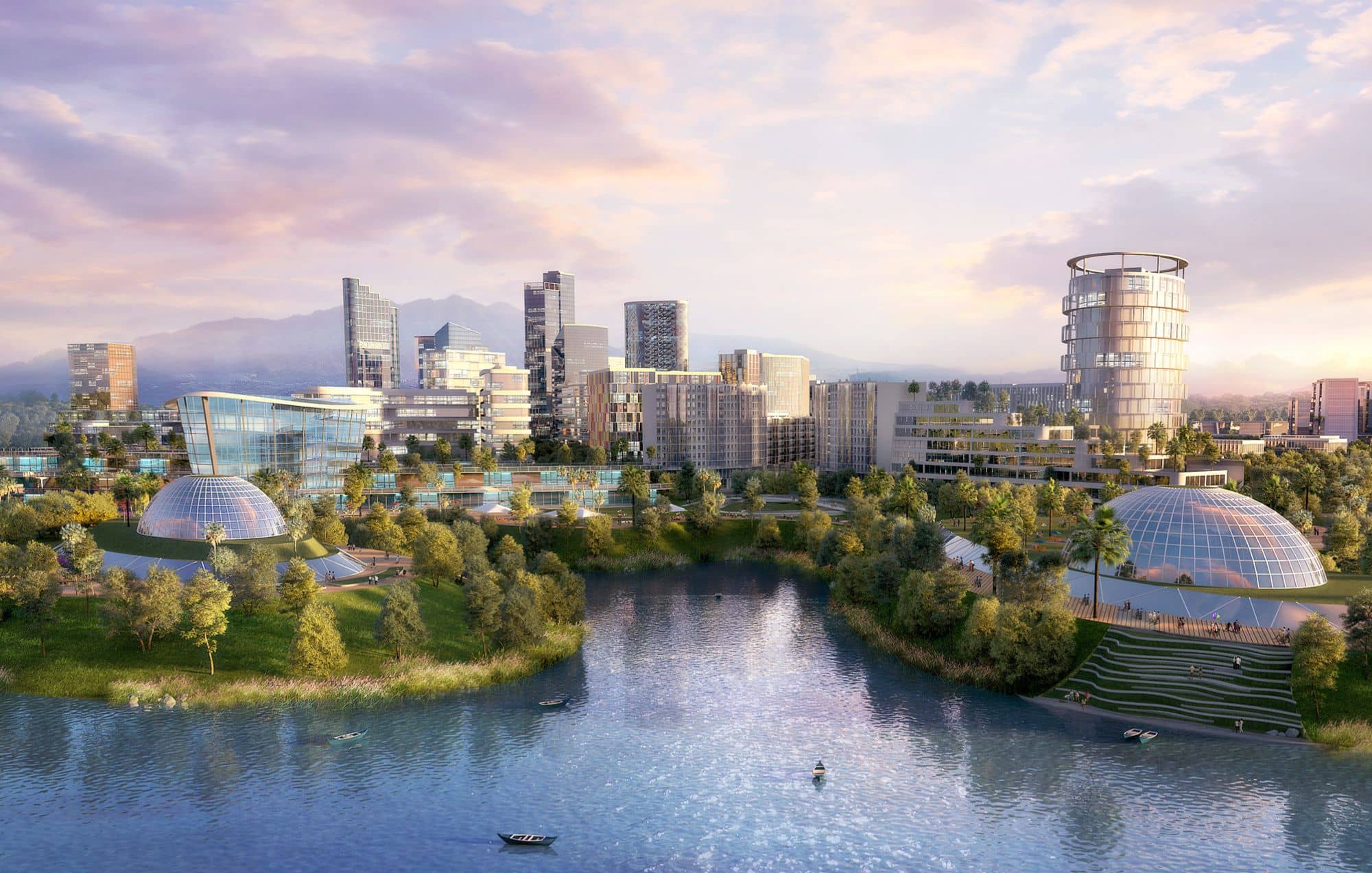
Just west of Bandung, where the city gives way to rolling hills and the shores of Lake Saguling, Kota Baru Parahyangan stretches across 1,250 hectares. Conceived as a self-contained township, it has been shaped around topography, with more than 40% of the land reserved for parks, lakes, and landscaped corridors. Education sits at the heart of the masterplan, with schools and universities integrated alongside healthcare, retail, and sport facilities, targeting long-term family owner-occupiers. Environmental measures, including on-site water recycling and Greenship Neighbourhood Gold certification, meanwhile, reinforce its sustainability credentials. As Bandung faces mounting congestion and limited expansion room, the township’s phased build-out through 2040 shows how long-term phasing and landscape planning offer a durable alternative to fragmented suburban expansion.
Bandar Dato’ Onn | Johor Bahru, Malaysia
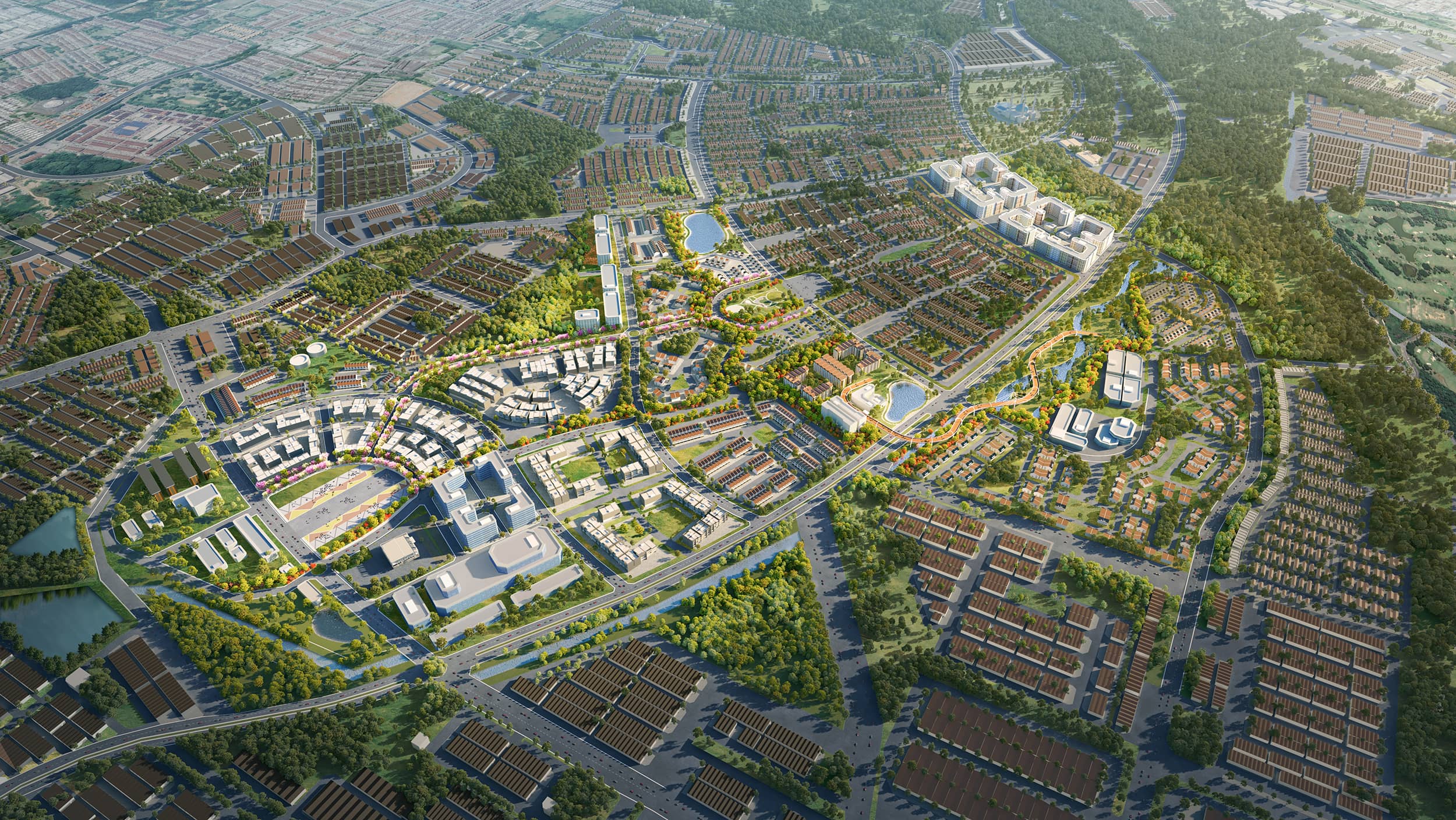
In a mature suburban corridor north of Johor Bahru, Bandar Dato’ Onn is attempting something more deliberate than incremental housing growth. Rather than extending as a conventional landed enclave, the 1,474-acre township is structured around a wellness-led masterplan that reorganises open space, mobility, and daily services at scale. Five precincts are stitched together by park connectors, pedestrian and cycling routes, and a blue-green network that functions as both landscape and stormwater infrastructure. Collector roads disperse into walkable neighbourhood pockets, with direct access to the Dato’ Onn toll interchange and the North–South Expressway. A broad housing mix—from terraces and townhouses to condominiums and bungalows—accommodates multigenerational households in a market historically dominated by standard landed typologies. Within Iskandar Malaysia’s competitive township market, Bandar Dato’ Onn signals a shift in Johor’s township model—away from land release and toward layout, mobility, and daily convenience.
Meyhomes Capital Phu Quoc | Phu Quoc, Vietnam
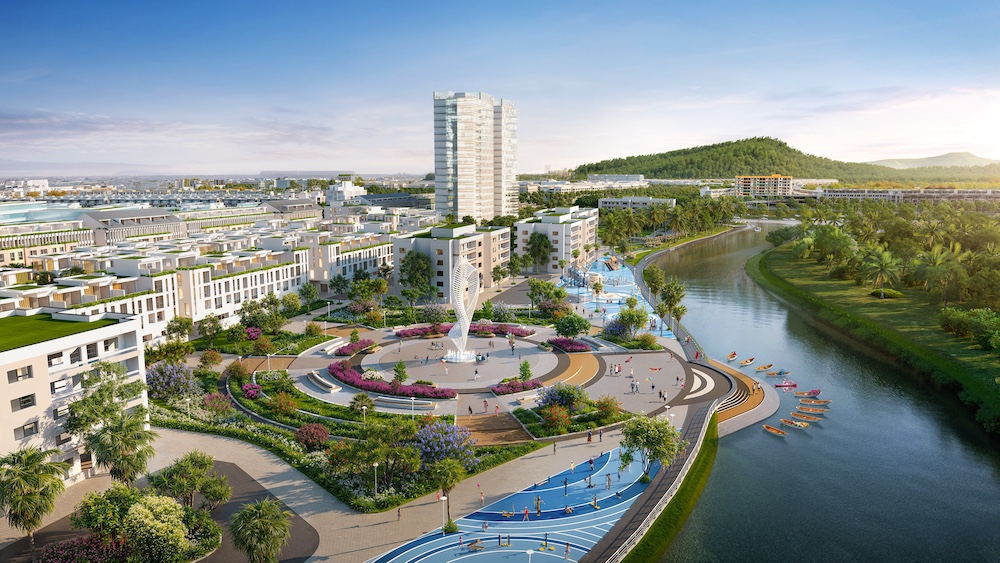
On an island better known for beaches than boulevards, Meyhomes Capital aims to create a permanent, year-round urban district offering stability beyond seasonal tourism. Spanning more than 266 hectares in An Thoi Ward and delivered across four phases, the scheme is approximately halfway through construction. Positioned as an “integrated mega city”, it combines shophouses, villas, apartments, and serviced offices with retail and community facilities. Commercial activity concentrates along residential streets rather than being confined to enclosed malls. A relatively restrained 35% construction density allows space for three major parks, connected by 1.2 kilometres of water features, public squares, and pedestrian promenades that structure the centre of the development. Direct frontage to DT975, the island’s principal arterial road, ties the development into Phu Quoc’s expanding transport network. Instead of relying solely on resort adjacency, Meyhomes Capital is staking its long-term appeal on walkability, internal commerce, and public realm—the foundations of a town intended to operate throughout the year.
ONE ERA | Ho Chi Minh City, Vietnam
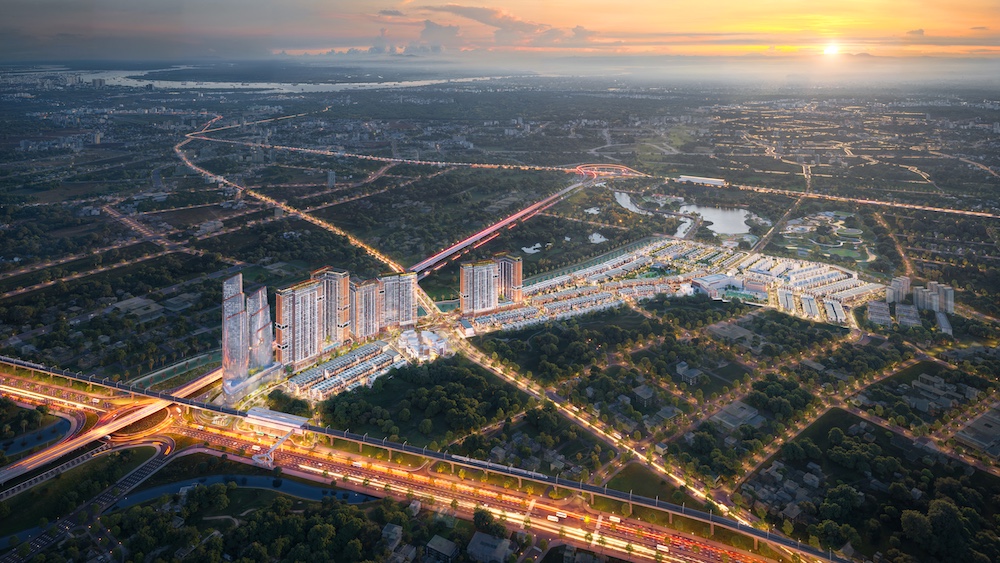
As the reach of Ho Chi Minh City continues to expand northwards into Binh Duong, ONE ERA represents a calculated early-stage play. The 49.5-hectare township sits along National Highway 13, a corridor increasingly defined by logistics parks, industrial employment, and residential growth. Construction has only just begun, with delivery planned across six phases through 2027—placing the emphasis firmly on long-term positioning rather than immediate absorption. The masterplan by Surbana Jurong divides the site into distinct residential clusters, ranging from high-rise apartments to villas and townhouses. A 1.2-hectare AEON mall and adjoining commercial precinct are designed to concentrate daily services within the township, reducing the need to travel elsewhere for routine errands. Sustainability is framed as baseline infrastructure, with EDGE design principles, rain gardens, solar lighting, and smart energy systems embedded from the outset. Its viability depends on transport access, nearby industrial employment, and digitally managed services that align over time.
SM Mall of Asia Complex | Pasay City, Philippines
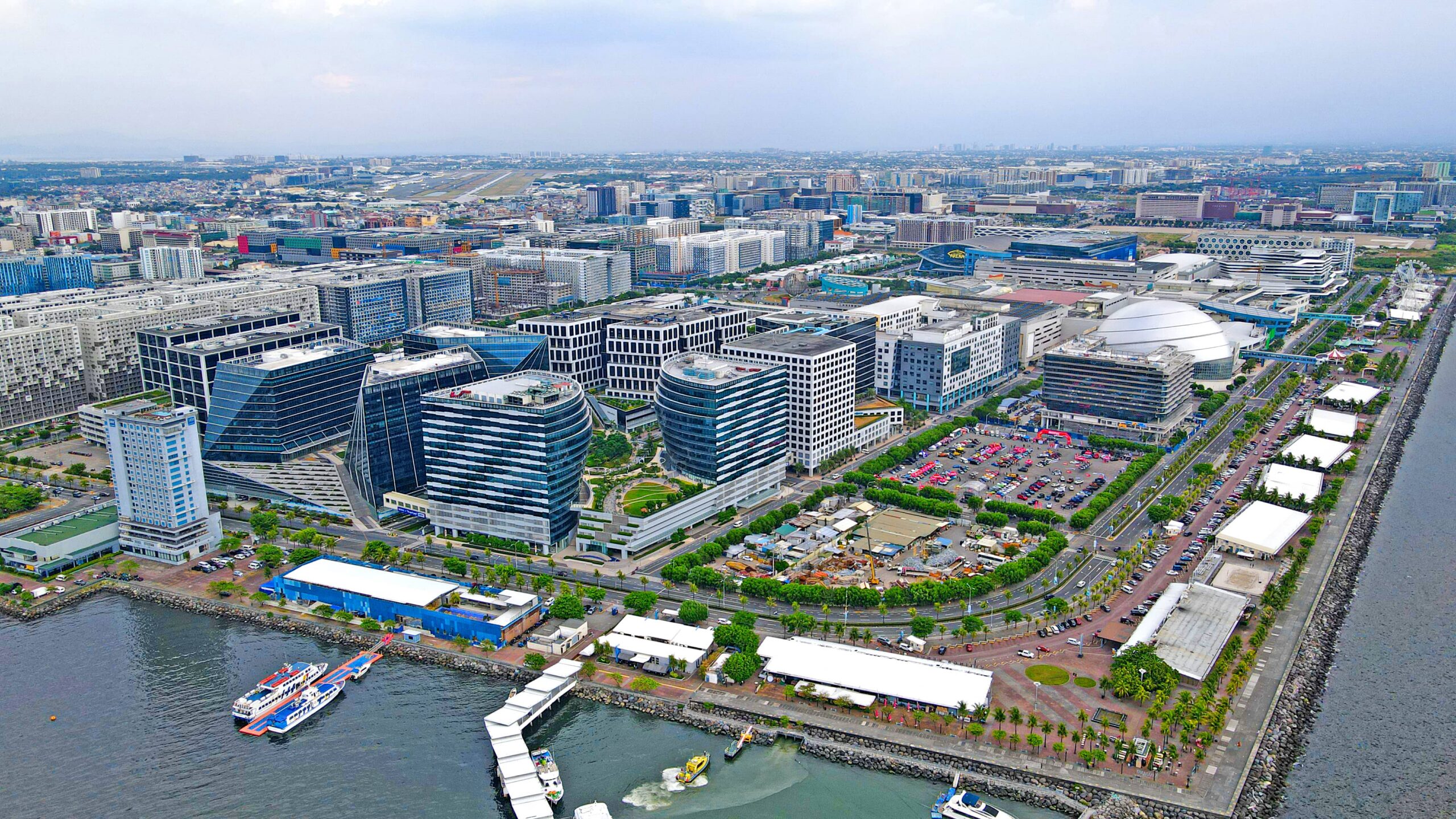
What began as one of Asia’s largest shopping malls has expanded into a full-scale waterfront district along Manila Bay. Spanning 890,000 square metres of reclaimed frontage in Pasay City, the four-phase development has matured into a dense mixed-use precinct that layers commerce, residential, and leisure uses at a metropolitan scale. The masterplan combines high-rise condominiums and serviced apartments with office towers, hotels, convention centres, and entertainment venues, extending outward from the original retail complex. Elevated walkways connect buildings, and internal roads and promenades link directly to Roxas Boulevard, EDSA, and the expressway system. Sports fields, landscaped parks, and bayfront promenades bring open space to this intensely programmed site. Instead of isolating functions, the complex clusters retail, work, and recreation within easy reach, functioning as an urban district in its own right rather than simply an enlarged retail destination.
Summarecon Serpong | Tangerang, Greater Jakarta, Indonesia
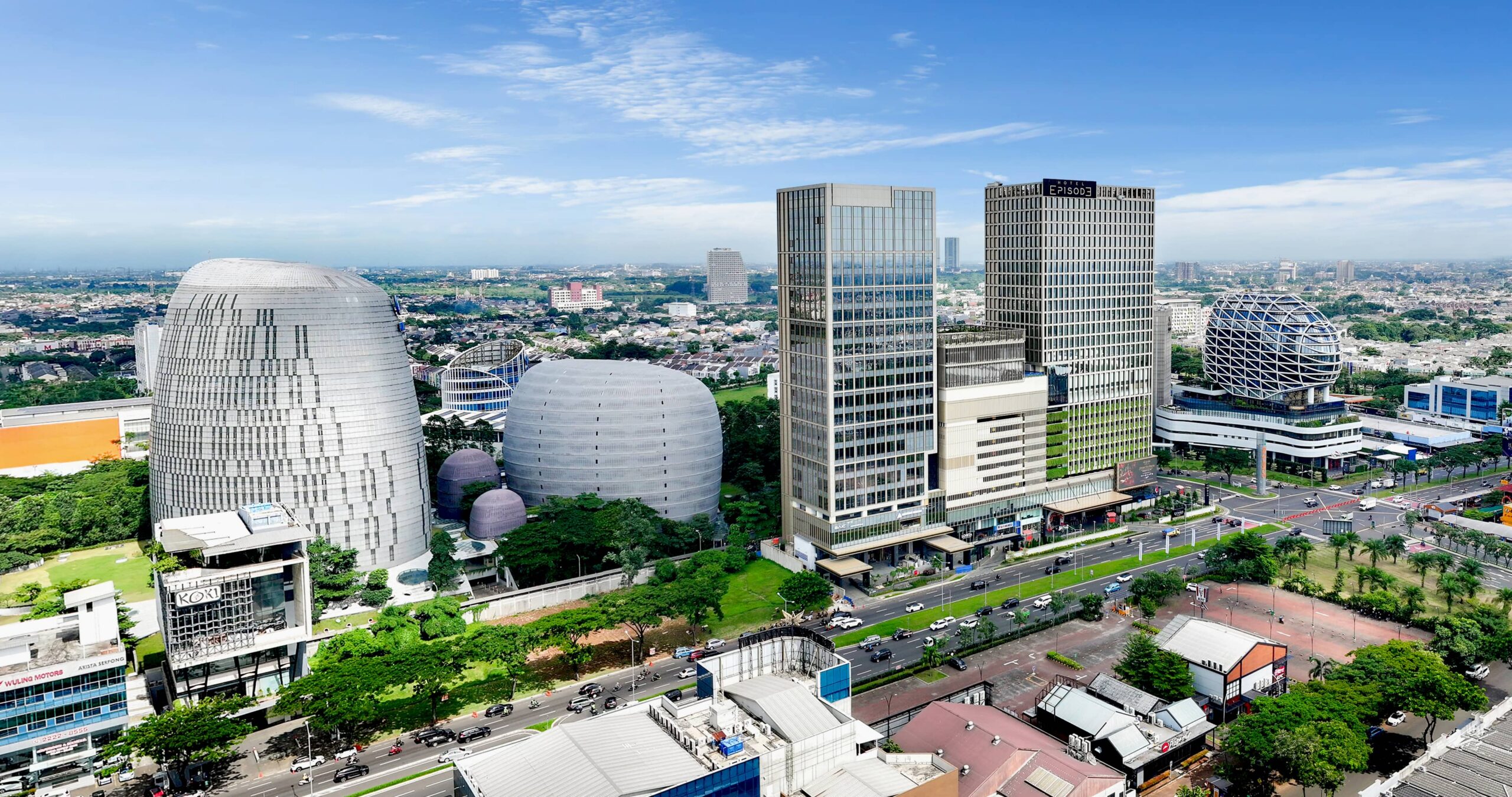
Summarecon Serpong has expanded west of Jakarta over several decades and is now more than three-quarters complete. Spanning 870 hectares, it functions more as a consolidated urban district within the broader Jabodetabek region than as a single estate. Landed homes, “condovillas”, and apartments sit alongside retail streets, a regional mall, schools, and healthcare facilities, forming a genuinely mixed-use district. Spread across multiple zones, these destinations reduce reliance on central Jakarta for everyday services. Large lakes, built into neighbourhoods as drainage ponds, meanwhile, help manage floods while doubling as parks, a practical solution for a city prone to flooding. Two toll road connections integrate the township into Greater Jakarta’s transport network, supported by shuttle services and an internal boulevard grid. Its primary market remains family owner-occupiers seeking long-term stability outside Jakarta’s frenetic centre.
This article was originally published on asiarealestatesummit.com. Write to our editors at [email protected].
Recommended
Is China’s housing market finally turning a corner?
Shanghai’s property revival raises hopes, but falling prices elsewhere point to a long recovery
Opportunity or trap? What Washington’s high-tech hub outside Manila means for Philippine property
The New Clark City Economic Security Zone promises billions in investment, but at what cost to Philippine sovereignty?
What Japan’s policy rate hike means for its property market
After decades of near-free borrowing, the country's policy rate is starting to reshape the calculations behind property investment

A conversation with the head of Vietnam’s Green Building Council on the cost of doing nothing
The VGBC’s Douglas Snyder argues that the real cost developers should fear isn’t building green. It’s failing to do so