Singaporean SMEs can now sign up for UOB loans to fund green buildings
The new Real Estate Sustainable Finance Framework is the first lending scheme for the industry by a Singaporean bank
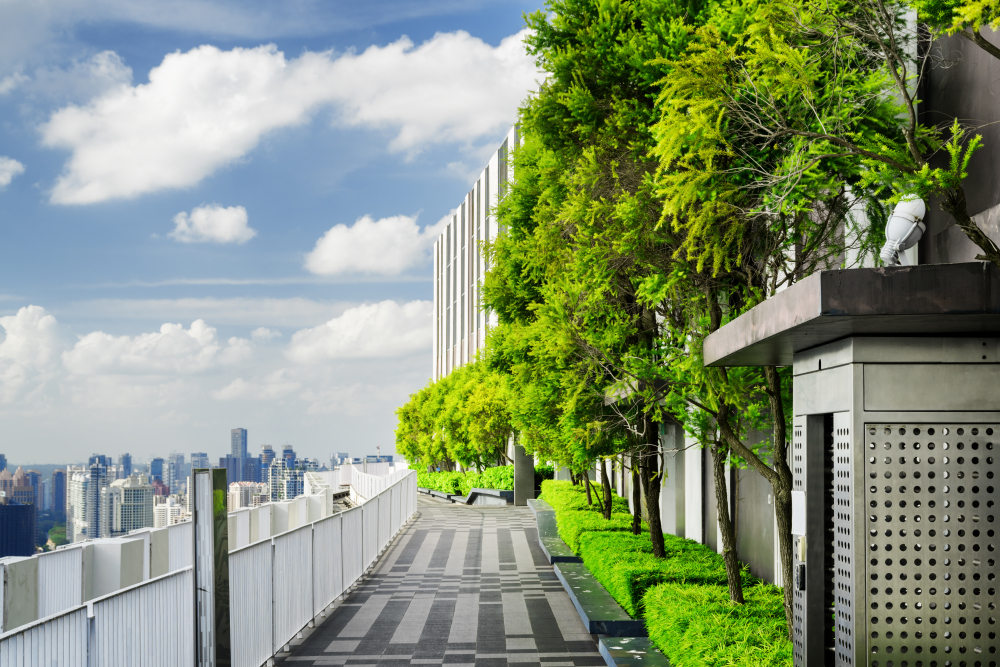
UOB has issued three loans amounting to SGD140 million (USD103 million) to Lucrum Capital and Teambuild Engineering & Construction, which will be used to construct and operate eco-friendly buildings in the country, reported The Business Times.
The new Real Estate Sustainable Finance Framework is the first-ever lending scheme to support green-focused projects implemented by a Singaporean bank.
UOB wanted to help small to mid-sized enterprises (SMEs) in the real estate industry, who often have limited budgets, develop more sustainable buildings. To be eligible, they must meet performance targets, sustainability strategy, ratings, and objectives.
Once the loan has been issued, the bank will monitor how each borrower has managed their loan proceeds, and then document the agreed sustainability metrics.
More: Pretty green: Singapore reaps what it sows
Lucrum Capital, a private equity firm, received two green loans for the development of a six-storey hotel, which will include water-efficient components, water and energy monitoring and management systems, energy-efficient lighting and air conditioning, and climate-responsive features to minimise the urban heat island effect — all of these will contribute at least 30 percent in their cost savings.
For Teambuild Engineering & Construction, the green loan will be used to fund their new integrated construction and prefabrication hub (ICPH). The project will include green walls, an energy management system, and rooftop solar panels with a 58.6 megawatt-peak total solar capacity.
Head of group commercial banking at UOB Eric Tham said that they have aligned their green financing with The Building and Construction Authority (BCA)’s target of certifying 80 percent of the buildings as green-friendly by 2030, along with the Sustainability Linked Loan Principles and Green Loan Principles that were issued by the Loan Market Association.
Recommended

What Japan’s policy rate hike means for its property market
After decades of near-free borrowing, the country's policy rate is starting to reshape the calculations behind property investment

A conversation with the head of Vietnam’s Green Building Council on the cost of doing nothing
The VGBC’s Douglas Snyder argues that the real cost developers should fear isn’t building green. It’s failing to do so

These 6 projects are among Asia’s greenest in 2026
Proof that better buildings are defined as much by how they operate as how they look
Indonesia’s property market feels the pinch of a reeling rupiah
As Jakarta tightens its grip on strategic minerals, investors are fleeing, leaving the property sector in limbo