Opportunity or trap? What Washington’s high-tech hub outside Manila means for Philippine property
The New Clark City Economic Security Zone promises billions in investment, but at what cost to Philippine sovereignty?
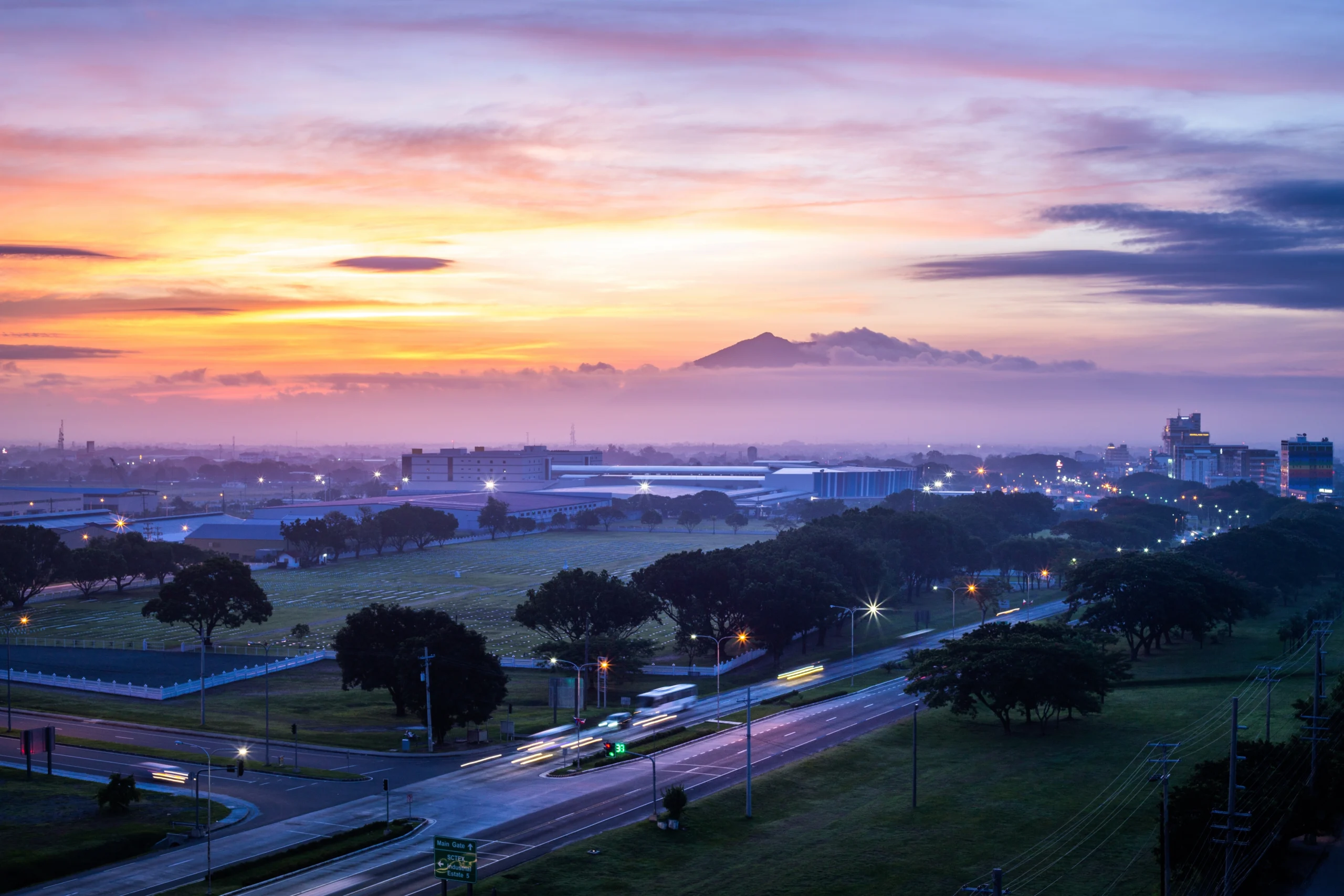
The Philippines badly needs investment. Growth has slowed, investor confidence is weak, and the country remains stuck in low-value manufacturing. In April, the United States proposed a potential solution: a 4,000-acre high-tech industrial hub in New Clark City designed to turn the Philippines into a powerhouse in semiconductors, artificial intelligence, and advanced manufacturing.
The project, part of Washington’s Pax Silica initiative, could attract between USD40 billion and USD70 billion in investment and create more than 130,000 skilled jobs, according to the Philippine government agency overseeing New Clark City.
Yet critics say there is a catch: The deal could come at the cost of Philippine sovereignty.
“Why are we turning over control to foreigners?” Senator Imee Marcos said in August, referring to the proposed arrangements.
Launched in December last year, Pax Silica aims to rival China in the race for critical minerals and AI technology. By securing supply chains with friendly countries, Washington hopes to gain the upper hand and stymie China’s bid for military and economic dominance.
Around two dozen countries have joined Pax Silica so far, including Japan, Australia, and South Korea, as well as Kazakhstan, a potentially important source of critical minerals that has also joined China’s coalition. The Philippines became the 13th country to join in April, paving the way for the proposed industrial hub in New Clark City.
“The Philippines, a close US treaty Ally, brings to Pax Silica key capabilities and human talent in technology manufacturing, including semiconductors and electronics,” the US State Department says in a statement. “The site—the first of its kind—is being offered by the Philippines as an Economic Security Zone, to surge production for inputs vital to US supply chains.”
Proponents say the deal could be transformative, injecting life into a lacklustre economy. GDP grew by just 2.3% year-on-year in the second quarter of 2026, while the industrial sector contracted by 2.4%. The World Bank expects growth of only 3.7% this year, citing weaker investor confidence, declining fixed investment and lower foreign direct investment.
“[Pax Silica] will bring quality jobs to our people, accelerate our industrial competitiveness, and revitalise our economy,” says President Ferdinand Marcos Jr. “As a strategic component of the Luzon Economic Corridor, the hub will be an advanced manufacturing and logistics center in the global AI and technology value chain,” he adds.
According to the Bases Conversion and Development Authority, which is overseeing New Clark City’s development, the hub could eventually generate USD200 billion in exports and as many as 190,000 direct jobs. Investment in the project could be equivalent to around 10% of the country’s GDP.
But in return, Washington has proposed a list of demands that critics say could erode Philippine sovereignty.
Among the most contentious was a US request for diplomatic immunity for personnel connected to the zone, which Philippine officials said they had rejected. Washington has also said the two countries would jointly determine the hub’s industrial priorities, giving the US a direct role in shaping the activities developed there. Pax Silica members would also be barred from joining a competing pact with China, putting Kazakhstan’s dual membership in a tight spot.
A draft State Department letter seen by Reuters warned that countries joining competing initiatives could be excluded from future US cooperation, with one American official saying partners “can’t have it both ways”.
“To be part of everything is to be part of nothing. Signature of the Pax Silica Declaration is not merely a membership subscription, but a commitment,” the letter says. “It cannot be held alongside membership in duplicative initiatives whose expectations conflict with our own,” it added, without specifically mentioning China.
Sovereignty isn’t just about flags and formal jurisdiction. Economic sovereignty means deciding what gets built, who invests, and what technologies are transferred.
Sonny Africa, executive director of the IBON Foundation, which researches socioeconomic issues, calls the pact “troubling”, saying it risked turning the Philippines into “a high-tech production site without becoming a high-tech industrial economy”.
“Why should a foreign government have a role in governing an industrial zone on Philippine territory?” he tells Property Report. “Sovereignty isn’t just about flags and formal jurisdiction. Economic sovereignty means deciding what gets built, who invests, what technologies are transferred, what local content is required, and whom our economy trades with.”
The Management Association of the Philippines (MAP), a prominent business group, echoed his concerns, saying the country should approach Pax Silica as a “strategic negotiation” rather than an arrangement that prioritises US interests.
“MAP supports the pursuit of the Pax Silica Initiative because it presents a potentially transformative opportunity to accelerate industrial development, create quality jobs, develop Filipino talent, and strengthen the nation’s position in the global economy,” the group says. “However, support for the initiative must be accompanied by clear safeguards that ensure technology transfer, environmental sustainability, inclusive growth, Filipino capability building, and the protection of national interests,” it adds.
In the coming months, attention will turn to how far Philippine officials are prepared to push back as they enter formal talks with Washington. The public pressure on Marcos to tackle the cost of living, inflation, and low wages could make it harder for Manila to walk away. His trust rating fell to a record low of 34% in late June, largely because of these issues.
However, Arnaud Leveau, president of the Paris-based think tank Asia Centre, says that the Philippines’ rejection of US requests for legal protections and diplomatic immunity was encouraging. “I would see the rejection as a positive sign. It demonstrates that Manila is not approaching the project passively and that there are red lines.”
Yet holding those red lines could become harder as more money flows in, he says. “These projects are negotiated over many years, and sovereignty questions rarely appear only once. They can reemerge in different forms: taxation, dispute settlement, data access, security arrangements, procurement rules, export controls, or restrictions concerning third-country companies. The real test is therefore institutional. Can the Philippines maintain the same negotiating capacity over the lifetime of the project, including when very large investments are at stake?” he adds.
For many observers, however, whether the Philippines can pass that test remains an open question.
This article was originally published on asiarealestatesummit.com. Write to our editors at [email protected].
Recommended
Opportunity or trap? What Washington’s high-tech hub outside Manila means for Philippine property
The New Clark City Economic Security Zone promises billions in investment, but at what cost to Philippine sovereignty?
What Japan’s policy rate hike means for its property market
After decades of near-free borrowing, the country's policy rate is starting to reshape the calculations behind property investment

A conversation with the head of Vietnam’s Green Building Council on the cost of doing nothing
The VGBC’s Douglas Snyder argues that the real cost developers should fear isn’t building green. It’s failing to do so

These 6 projects are among Asia’s greenest in 2026
Proof that better buildings are defined as much by how they operate as how they look