Gulf luxury markets lure global capital amid policy shift
Gulf nations are shaking off a reputation for overt bling to lead a post-pandemic luxury boom, turning the heads of wealthy investors from around the globe
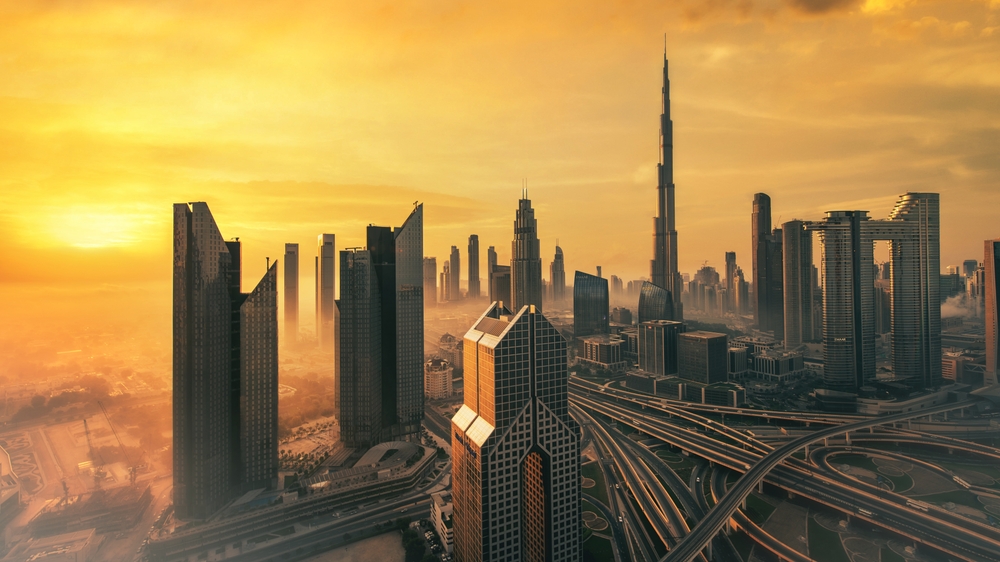
It’s being marketed as the highest penthouse in the world: a 21,000-square-foot shell on the 107th and 108th floors of the Burj Khalifa. Private elevator. Indoor pool. No interior walls.
The so-called “Sky Palace” hit the market earlier this year for just under USD50 million. Agents say early interest has come from celebrity managers, crypto founder — and Floyd Mayweather.
It’s peak Dubai, the type of showpiece that has earned the emirate a reputation for striking an oftenprecarious balance between glamourous and gaudy. But the Gulf’s real estate surge runs deeper than spectacle. The emirate is leading a post-COVID luxury boom, topping global charts for ultra-prime sales. In Saudi Arabia, Vision 2030 is shifting from render to reality, with giga-projects now visibly underway.
Still, the region’s old pressure points persist. Oil price swings, high interest rates, and regional instability continue to test investor resolve. The Gulf has seen its share of boom-bust cycles. But this one feels different—more policy-led, more demographically grounded. Whether that translates into real resilience or just another reinvention will define the next phase.
UAE: Gulf in the market
Spectacle still sells, but in 2025, Dubai added substance to the show. For the first time, the emirate overtook New York and London in USD10 million-plus home sales, topping Knight Frank’s global ultra-prime rankings.
“This year we have seen Dubai transform into a proven global centre for ultra-prime residential,” says Will McKintosh, regional partner and head of residential MENA at Knight Frank. “The growth is underpinned by genuine end-user demand rather than speculative activity.”
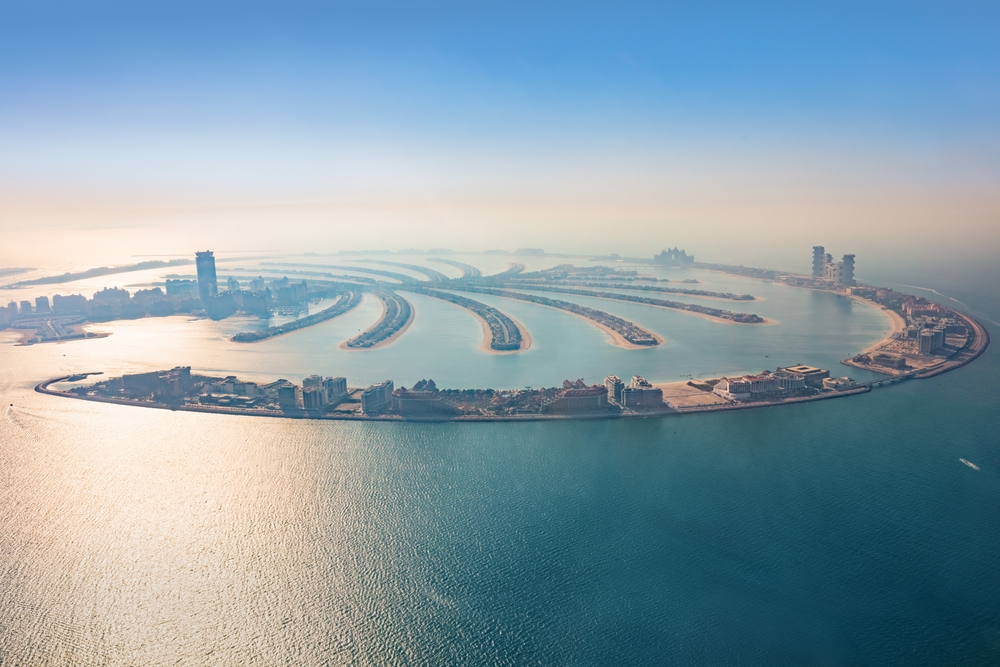
Another recent Knight Frank report noted that prime residential prices rose 19 percent last year, with demand focused on large waterfront villas, branded residences, and land for bespoke builds. On Palm Jumeirah alone, villa prices climbed more than 20 percent in 2024.
The Gulf has seen its share of boom-bust cycles. But this one feels different. It’s more policy-led, more demographically grounded
Branded residences have emerged as the dominant luxury product, with values regularly exceeding AED18,000 (USD 4,901) per square metre. Buyers are prioritising service and liveability, often customising layouts and finishes. McKintosh notes that many are “prepared to pay well above market” for homes operated by prestigious brands, not for resale, but to live in.
That permanence is reflected in the buyer mix. Europeans, Russians, and increasingly Indians dominate high-end deals, while developers are reengaging Chinese investors via structured payment plans and long-term visas.
In particular, the 10-year Golden Visa, along with expanded family and investor residency rules, has become a key draw for wealthy expats and entrepreneurs.
But beyond the ultra-prime market, the picture is less polished. Of the 73,000 units due for delivery in 2025—and 350,000 through 2028—fewer than four percent fall within the AED3,000–5,000 per square foot range.
Nearly two-thirds of new stock now targets the AED1,000–2,000 bracket, according to Knight Frank.
Still, volume isn’t closing the gap. Supply trails demand in many areas, and high interest rates are squeezing middle-income buyers. Since 2020, average prices have jumped more than 65 percent, pushing “affordable” homes out of reach for many.
At the top end, it’s a different story. Prime beachfront stock remains scarce, helping insulate values. Fitch Ratings warns of a potential 10–15 percent correction by 2026 due to speculative oversupply but expects prime assets to hold steady.
That confidence rests on a maturing regulatory environment. Escrow rules are enforced. Anti-money laundering laws are tighter. Full foreign ownership is allowed in key zones.
“When developers follow RERA requirements, like maintaining separate escrow accounts for each project, investors can see exactly where their money is going,” says John Varghese, managing partner at HLB HAMT.
The new nine percent corporate tax and clearer free zone structures have also helped overseas investors model costs more confidently. But not all corners of the market offer the same clarity.
“There is now a bifurcation,” McKintosh adds. “Prime and ultra-prime are buoyed by global capital and lifestyle-led investment. The mid-market is under real pressure.”
The result is a split market: thriving at the top, squeezed in the middle. For a city that positions itself as a hub for opportunity, that imbalance remains unresolved.
Abu Dhabi, meanwhile, is moving at a steadier pace. Apartment prices rose 4.0 percent, villas 4.4 percent year-on-year in Q1 2025, according to JLL, with just over 1,100 new units delivered.
“Abu Dhabi’s residential market is poised for continued growth, driven by sustained investor demand in designated investment zones such as Yas Island and Al Maryah,” JLL notes, with new communities that offer modern design and lifestyle appeal emerging as key demand drivers.
That approach lacks the drama—and global headlines—of Dubai. But for investors chasing stability over spectacle, it’s becoming a quiet contender.
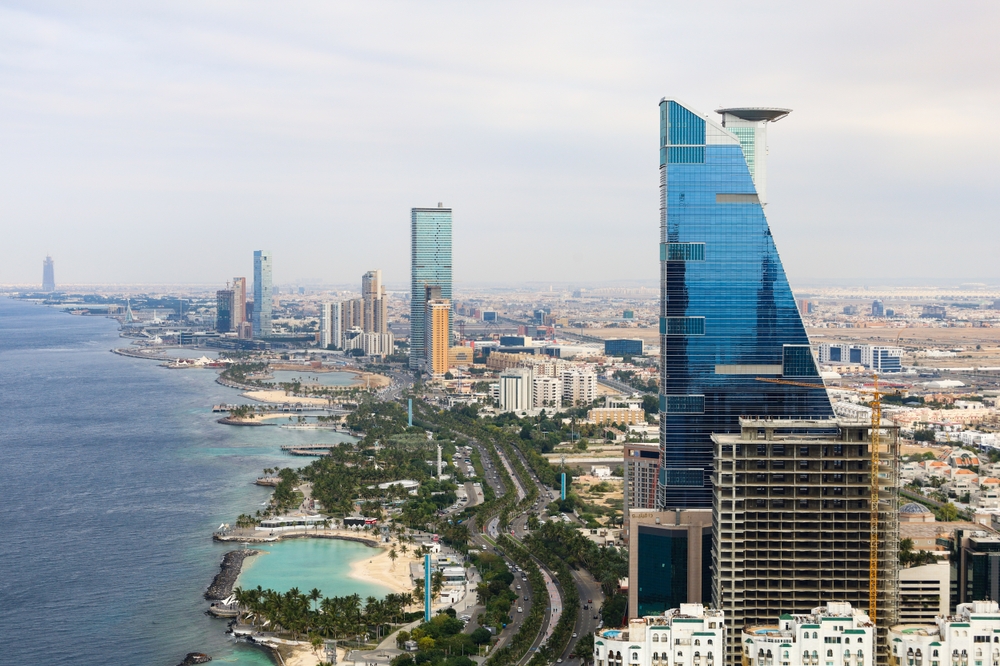
Saudi Arabia: Kingdom come?
If Dubai dazzles with spectacle, Saudi Arabia is betting on scale. The Kingdom’s residential sector is projected to attract USD1.22 billion in investment in 2025, according to Knight Frank, as its urban population swells by eight million people by 2030—a foundational driver of real estate expansion.
Giga-projects like NEOM, Diriyah Gate, and Qiddiya have moved from render to reality. NEOM’s Sindalah Island opened in late 2024. At Diriyah Gate, the Bujairi Terrace district is now operational, combining cultural landmarks with premium retail and F&B. More than USD2 billion in contracts were awarded there in 2024, including new deals with Indian conglomerates like Tata and Oberoi.
“Despite global headwinds, Saudi’s diversification and scale are attracting serious capital,” says Saud Alsulaimani, country head of KSA at JLL. “Limited prime vacancy, strong tourism momentum—all of that is driving demand in Riyadh and Jeddah.”
The lifestyle shift is real. New districts are prioritising walkability, curated retail, and high-end public space. “A compelling investment landscape,” JLL calls it.
Jeddah is emerging as a high-end lifestyle hub, with Red Sea developments drawing interest from returning nationals and regional buyers. Mixed-use, branded, and waterfront assets are all gaining traction.
With over 60 percent of Saudis under 35, the design brief is changing fast. At the PIF-backed Roshn Group’s first Riyadh project, that meant scrapping gated compounds in favour of open, walkable communities
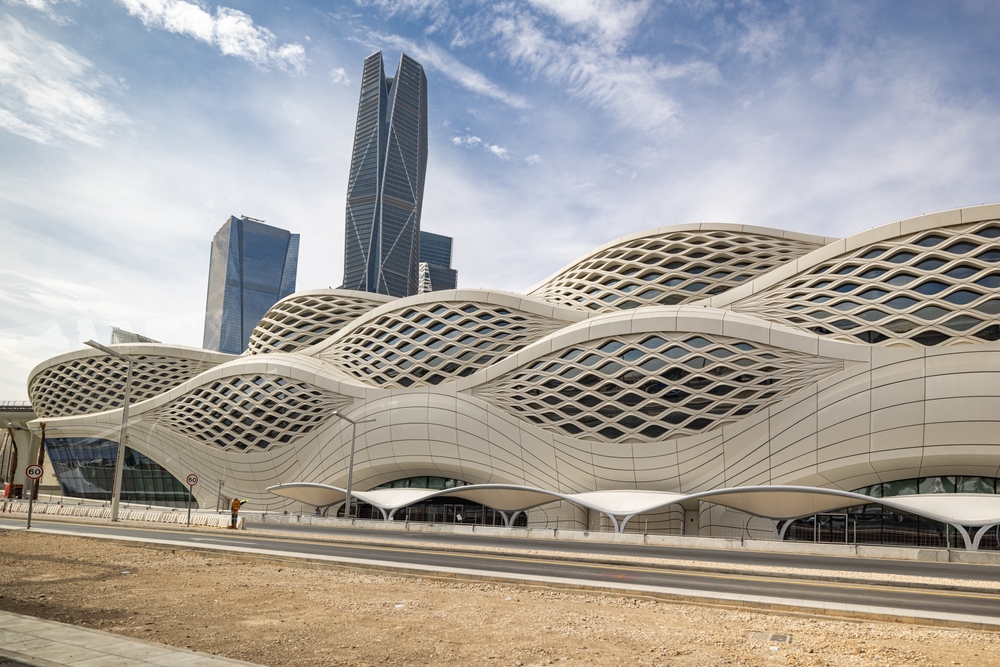
“We asked, what happens if you take that wall out and create a living street?” said Oussama Kabbani, Roshn’s chief development officer, in the Financial Times. “To our surprise, it just flew. People were waiting for someone to open the door to a new lifestyle.”
But scrutiny is rising too. With billions on the line, delivery timelines, legal safeguards, and transparency are under the microscope. Vision 2030’s Financial Sector Development Program (FSDP) is pushing governance reform. And the pace is picking up.
The market opened to foreign buyers in 2024. A five percent Real Estate Transfer Tax has been introduced to fund infrastructure. And audit and disclosure standards are tightening.
“Clearer rules and stronger audit practices are making investors feel safer about putting in their money,” says Varghese. “Foreign investors now want proper financial records, clear ownership structures, and strong internal systems. If everything is transparent and meets global norms, they’re more likely to go ahead with a deal.”
While the UAE remains more familiar with international capital, Saudi Arabia is closing the gap fast.
Still, affordability is becoming a tension point. House prices in Riyadh are now 81 percent higher than in 2020, and apartment prices are up 56 percent, according to Knight Frank. While the national homeownership rate has hit 63 percent, it’s just 53.2 percent in the capital.
The government is stepping in. More than 30,000 homes are now under development by the state’s National Housing Company, with starting prices of around SAR375,000 (USD100,000). Statesubsidised loans are also being deployed as part of the Kingdom’s push to reach 70 percent home ownership by 2030.
Saudi Arabia and the UAE are chasing the same prize: investor credibility. But their playbooks differ.
Dubai has built its brand. Its challenge now is scale. Can it make the mid-market work while holding the top end steady? Saudi has the money, the momentum, and the mandate. What it needs is proof of concept: liveable communities, reliable delivery, and regulatory trust.
One is refining a mature model. The other is betting big on reinvention.
The ambition is clear. What matters next is execution.
This article was originally published on asiarealestatesummit.com. Write to our editors at [email protected].
Recommended
Is China’s housing market finally turning a corner?
Shanghai’s property revival raises hopes, but falling prices elsewhere point to a long recovery
Opportunity or trap? What Washington’s high-tech hub outside Manila means for Philippine property
The New Clark City Economic Security Zone promises billions in investment, but at what cost to Philippine sovereignty?
What Japan’s policy rate hike means for its property market
After decades of near-free borrowing, the country's policy rate is starting to reshape the calculations behind property investment

A conversation with the head of Vietnam’s Green Building Council on the cost of doing nothing
The VGBC’s Douglas Snyder argues that the real cost developers should fear isn’t building green. It’s failing to do so