Industrial heat meets residential cool across Malaysia real estate
A server-farm boom powers Malaysia’s property market while residential recalibrates around affordability and caution
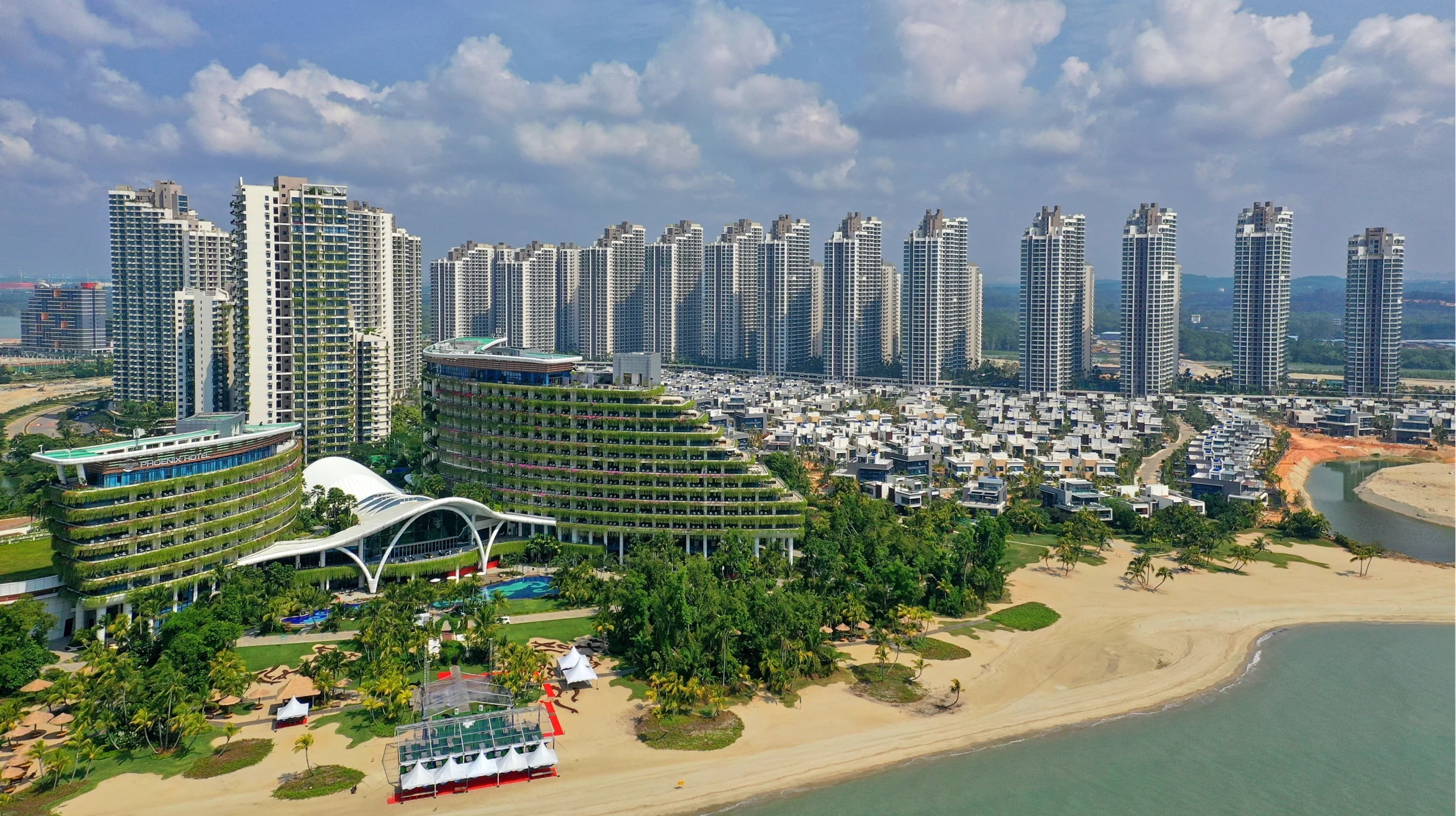
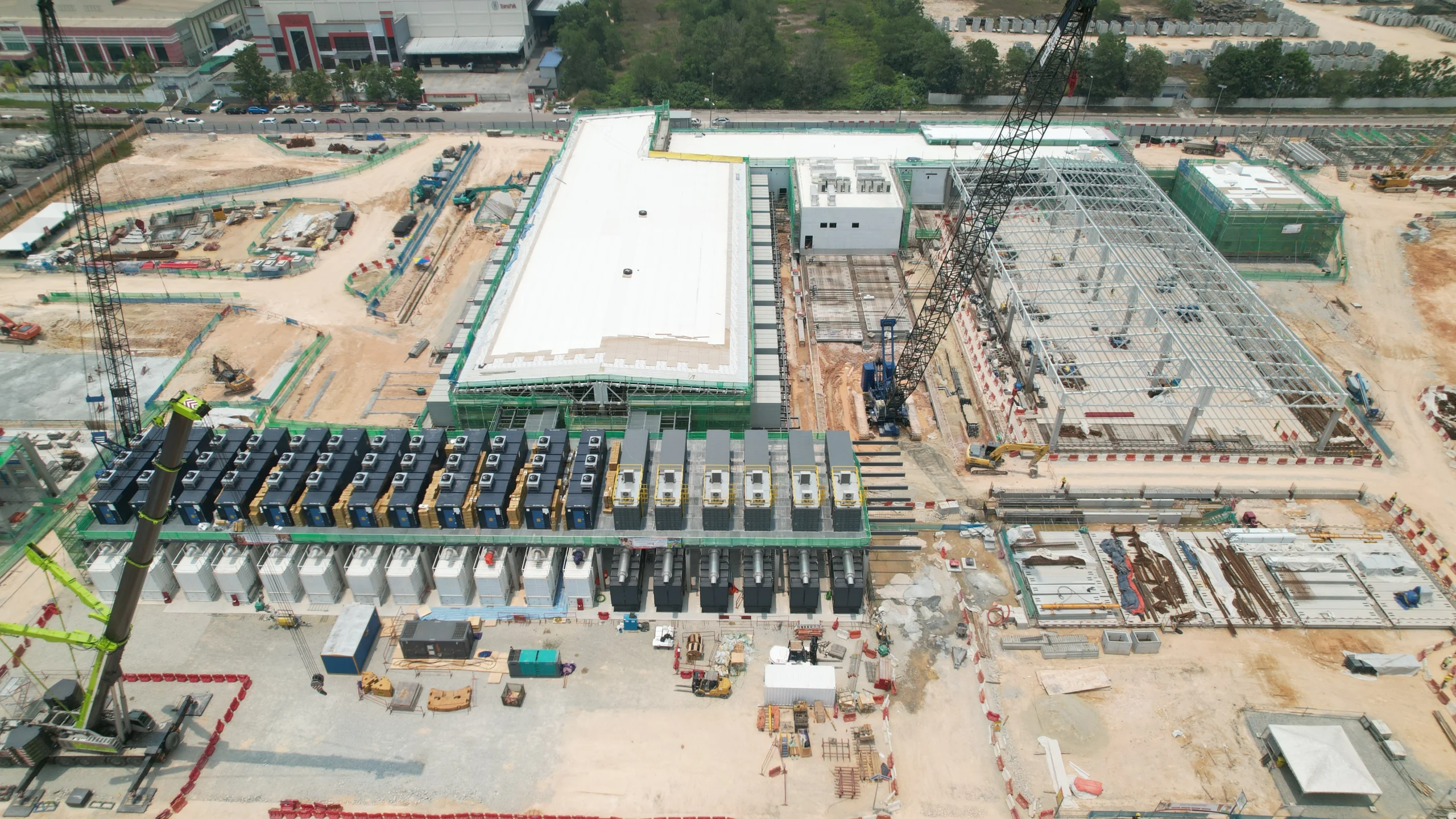
Away from Kuala Lumpur’s piercing skyline, something is humming beneath Malaysia’s real estate fabric: data centres.
Power-hungry and water-intensive, they have found an oasis in Malaysia, which boasted operational capacity approaching 11.6 gigawatts in late 2025.
The resulting digital gold rush is reshaping the country’s property narrative, splitting it between surging demand for industrial assets and a residential market in measured recalibration.
Capital is flowing into quality, strategically located assets. While total transactions dipped 3.5% to 108,250 in the third quarter of 2025, overall value surged 12.5% to MYR64 billion (USD14.4 billion) year-on-year, according to the National Property Information Centre (NAPIC).
“The star of the market, as has been for the past few years, is the industrial sector,” says Long Tian Chek, group managing director of Henry Butcher Malaysia.
NAPIC data from the first half of 2025 reinforces the trend: Industrial transactions rose 8.5% in volume and 5.6% in value, led by Selangor and Johor. Foreign direct investment, expanding e-commerce logistics, and hyperscale data centre demand have combined to fuel the boom.
The residential sector, by contrast, remains subdued. The Malaysian House Price Index edged up just 0.1% year-on-year to 229.1 points, with the average home price at MYR494,384. In H1 2025, residential transactions totalled 120,307, down 1.4%, with a combined value of MYR49.37 billion.
“I would characterise the current scenario as recalibration rather than recovery or correction,” says Datuk Ar. Ezumi Harzani Ismail, chairperson of the PropertyGuru Asia Awards Malaysia.
The supply picture underscores that shift. Unsold completed homes climbed 16.3% to 26,911 units in H1 2025, with condominiums and apartments accounting for 57.9% of the overhang. By Q3, unsold units had reached 28,672, valued at MYR17.25 billion.
Kuala Lumpur accounted for the largest share, with approximately 3,643 units. JLL reports resilience in well-designed prime developments favoured by expatriates and affluent locals, while older, pre-Covid projects continue to struggle.
“Legacy overhang issues are gradually being addressed as businesses adapt,” says Ezumi. “Developers are recognising the need to revitalise assets and refine positioning.”
Policy direction is also influencing sentiment. Prime Minister Anwar Ibrahim has reinforced his MADANI framework, promoting a more inclusive and skilled Malaysia. In August, he criticised developments that prioritise spectacle over substance. “There are grand buildings and mega projects that bring no real benefit other than impressing people, and we can no longer defend such developments,” he said.
The digital gold rush is reshaping Malaysia’s property narrative, sparking surging demand for industrial assets
New residential launches reflected that caution. By the end of Q3, launches fell to 11,533 units, with sales performance at 14%, according to NAPIC.
Demand remains concentrated in affordable and landed housing. Properties priced at MYR300,000 and below accounted for over half of residential transactions in H1 2025. Terraced houses made up nearly 60% of new launches, with Johor and Perak emerging as key hotspots.
Johor led the country with 5,401 new units launched and a sales rate of 44%. The state continues to benefit from major infrastructure projects, including the East Coast Rail Link, the Johor Bahru–Singapore Rapid Transit System Link, and the Johor–Singapore Special Economic Zone.
“Infrastructure development is the single most significant factor shaping our landscape today,” says Ezumi. “Communities are forming around new transport corridors.”
Currency dynamics have added complexity. After a prolonged period of weakness that made Malaysian assets attractive to foreign buyers, the ringgit strengthened to eight-year highs in February, supported in part by capital inflows tied to data centre investment.
A stronger currency may temper foreign demand, particularly with an 8% stamp duty on foreign buyers set to take effect in 2026. Industry observers, however, downplay the impact. “Stamp duty should be viewed in the context of long-term fundamentals,” says Ezumi. “Investors assess value appreciation, rental yields, and broader lifestyle considerations.”
Government initiatives have bolstered local demand. Measures include a reduction of the Overnight Policy Rate to 2.75%, tax relief on housing loan interest, and the MYR5-billion Step-Up Financing Scheme under the Housing Credit Guarantee Scheme. Banks have tightened bridging finance for luxury high-rise developments, redirecting focus toward industrial and income-generating assets.
Manufacturing momentum has reinforced the industrial story. The Industrial Production Index rose 6% year-on-year in October 2025. In the first nine months of 2025, Malaysia attracted MYR285.2 billion in approved investments, 52.9% of which came from foreign direct investment, according to Henry Butcher. Johor led with MYR91.1 billion, followed by Selangor and the Federal Territory.
Land reclamation is advancing on Silicon Island in Penang, strengthening the state’s semiconductor ambitions. In Johor, Sedenak Tech Park within the Ibrahim Technopolis hosts what is described as the largest hyperscale data centre campus in Southeast Asia.
Although Prime Minister Anwar has recently restricted approvals for non-AI-related data centres due to resource concerns, Malaysia remains committed to positioning itself as a high-tech manufacturing and digital hub.
“As an open economy dependent on international trade, Malaysia remains vulnerable to global shocks,” says Long. “We expect continued stability, though growth is likely to moderate rather than accelerate sharply.”
Ezumi projects modest residential price growth this year, supported by low unemployment, first-time buyer demand, and economic expansion of between 4.3% and 4.7%. Over the next two years, he anticipates firmer upward momentum as sentiment strengthens. “There are solid reasons for cautious optimism,” he says.
This article was originally published on asiarealestatesummit.com. Write to our editors at [email protected].
Recommended

6 projects designed for people and planet
Sustainability has shifted from buzzword to blueprint, and this new generation of buildings proves it
6 homes where luxury finds its character
Asia's ultra-wealthy crave stories, values, and vision. Developers respond with bold, meaning-driven creations

This cybersecurity pioneer explains why digital resilience is becoming real estate’s next quality benchmark
Duncan Simpson on the hidden vulnerabilities in connected buildings and why cyber risk is now a property issue

6 projects raising the bar for workplaces across Asia
Smarter systems, tighter operations, and rising occupier expectations redefine the commercial building