Veteran investor proposes to finance $12.8 billion in Hong Kong’s Lantau Tomorrow Vision project
The proposal entails establishing an HKD100 billion (USD12.8 billion) company, 75 percent owned by Hong Kong citizens
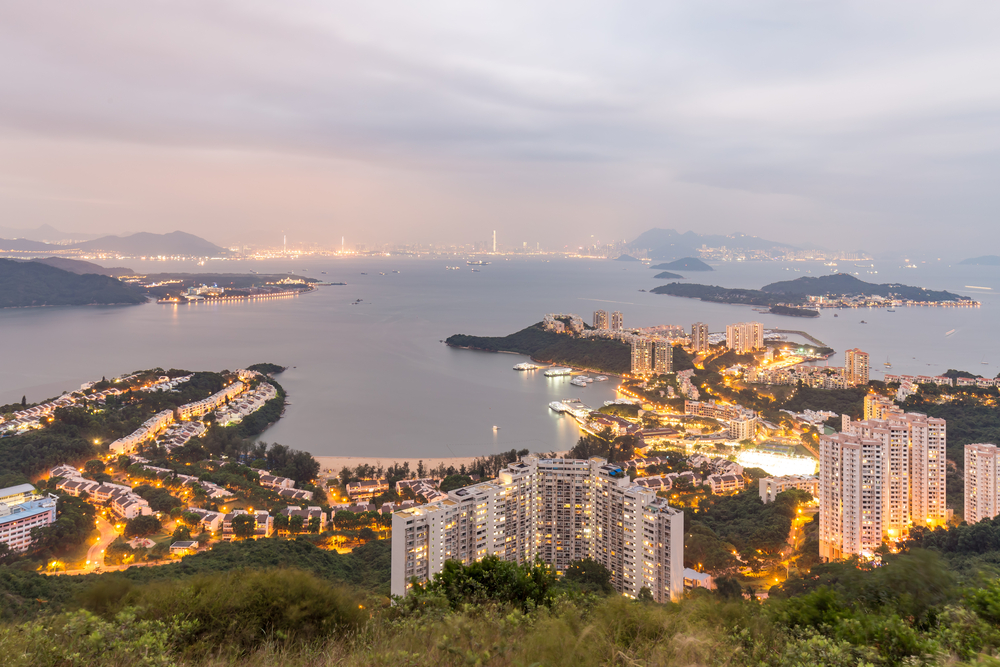
Hong Kong veteran investor, Sing Wang, has proposed to set up a public-private company that will fund the Lantau Tomorrow Vision project valued at HKD624 billion (USD80 billion). This “Popular Public Private Partnership” will raise HKD1.1 trillion, with the intention of also being listed on the Hong Kong stock exchange. However, analysts argue against this controversial project, calling for the public’s attention.
According to the South China Morning Post, the Lantau Tomorrow Vision is the government’s aspiring development project that aims to construct artificial islands with a total of 1,700 hectares (4,200 acres). The plan involves an enormous land reclamation near Hei Ling Chau and Kau Yi Chau, located nearby Lantau Island. The development has been under a lot of scrutiny and criticism due to its inherent environmental harm and immense costs.
As 75 percent of the offered public-private partnership will be owned by Hong Kong residents, Wang states that all citizens will be presented with free warrants valued at HKD75 billion. Once the company is listed on the Hong Kong stock exchange, citizens will be allowed to change warrants into shares.
More: Hong Kong industrial market descends amid pandemic, while demand for data centres skyrocket
Wang said, “if the government fortunately does approve it, and fortunately my private company can participate … I will donate 70 percent of profits to Hong Kong. I need to make some money for the work. [But] I’m not doing this not for maximising personal wealth. This is not my goal.”
Wang claimed to have sought advice on the proposal from Gordon Wu Ying-Sheung, chairman and founder of Hopewell Holdings, as well as ex-development minister Anthony Cheung Bing-Leung.
Nevertheless, experts are still hesitant about the development’s feasibility. Researcher Neon Yiu at Liber Research Community added that the plan seems “farfetched”, and citizens actually won’t be given the opportunity to voice themselves in the process of this development.
Recommended

Why cities plan for decades but finance only for years
Chantale Wong on how mismatched timelines between cities and capital are stymieing Asia-Pacific’s urban future
Industrial heat meets residential cool across Malaysia real estate
A server-farm boom powers Malaysia’s property market while residential recalibrates around affordability and caution

Young buyers hold the key to unlocking Bangkok’s empty homes
The Thai capital's skyline still rises, but the market seems out of sync with its next generation of buyers
Investors double down on Jakarta despite Nusantara’s political rise
Density, demand, and capital flows continue to anchor real estate momentum in Greater Jakarta