Trust gap slows Chinese tourism and property investment in Thailand
Scam-related narratives on Chinese social media have accelerated a shift in tourism and property investment away from Thailand
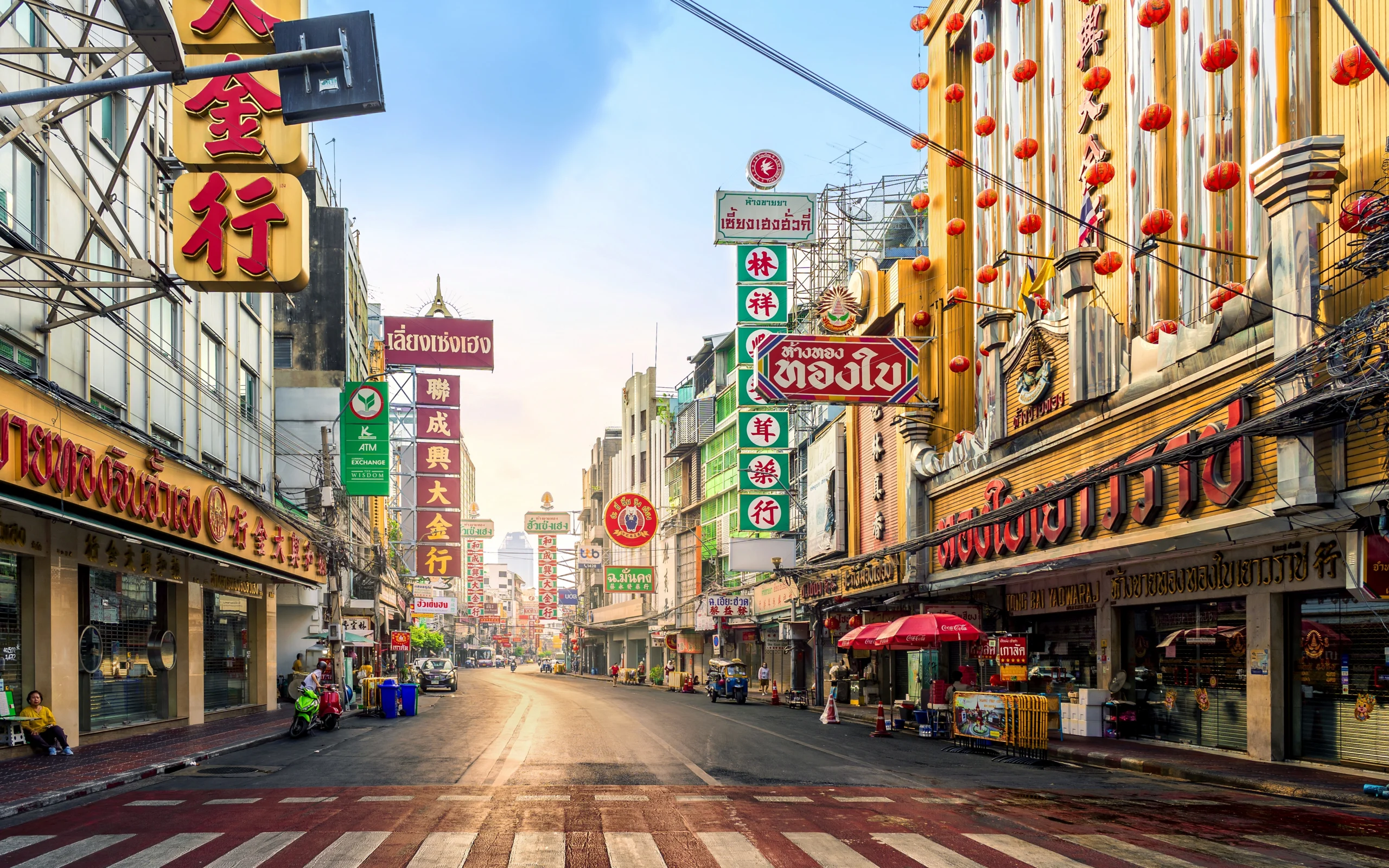
In January 2025, videos and posts linked to the abduction of Chinese actor Wang Xing spread rapidly across Chinese social media platforms.
Lured to Thailand and trafficked to a scam compound near the Myanmar border, the case quickly became shorthand online for wider anxieties around travel safety, scam networks, and governance failures across parts of Southeast Asia.
Wang’s abduction followed a series of kidnapping-related incidents involving Chinese nationals in Thailand during 2024, including unrelated cases that nonetheless circulated widely on Chinese platforms such as Douyin, Weibo, and Xiaohongshu.
As clips spread, individual incidents were increasingly stripped of context and stitched together under alarmist captions warning against travel to Thailand. Geography blurred, cases merged, and perceived risk spread faster than verified information.
The move from viral content to market impact was swift. China–Thailand air capacity now sits at roughly 60% of its 2019 level, while Chinese investment in Bangkok’s condominium market has fallen sharply. Thailand’s appeal has not collapsed, but its default status has.
The Chinese outbound market today is structurally different from 2019, and Thailand is one of the clearest casualties of that shift
For Chinese travellers and investors, the country is no longer assumed to be the safest or easiest choice in the region, says James Woo, executive director and co-head of valuation in China at Colliers.
“The Chinese outbound market today is structurally different from 2019, and Thailand is one of the clearest casualties of that shift,” he explains. “Travellers are more selective, more risk-aware, and far less willing to default to familiarity.”
The regional contrast is stark. Traffic between China and Japan is up 35%, while South Korea has recovered by 13%, Woo adds. On the ground, the change is visible. In Phuket and Pattaya, average Chinese group-tour coach sizes have fallen from 42 passengers in 2019 to around 28 today. Retail indicators point to softer spending as well as lower volumes. Duty-free expenditure per Chinese visitor is down 18% in RMB terms.
What has changed is not only where Chinese travellers are going, but how decisions are made. Safety has become a veto, outweighing price, proximity, and familiarity. In recent traveller surveys, it has overtaken cost as the most common reason for ruling out a destination.
Exit polling at Shanghai Pudong Airport cited in Colliers’ advisory analysis shows how sharply behaviour has shifted. Among Chinese passengers who chose not to travel to Thailand, 38% cited concerns about scam risk, compared with 14% for Vietnam and just 6% for Japan.
“In China, perception often moves faster than facts, especially on social platforms,” says Marciano Birjmohun, vice chairman of the Singapore-Thai Chambers of Commerce. “For many travellers and investors, those narratives introduce uncertainty long before official assurances are heard.”
That uncertainty is now feeding into the residential market, particularly segments that once relied heavily on Chinese demand.
In Bangkok, Chinese buyers accounted for nearly half of all foreign freehold condominium transfers in 2018. By the third quarter of 2025, that share had slipped to just over 20%, according to Colliers. Prices have softened alongside volumes, with average prices paid by Chinese buyers falling from about THB118,000 (USD3,761) per square metre in 2019 to closer to THB98,000 today.
Related: Core cities lead China’s housing recovery amid shifting buyer sentiment and policy support
More telling than price is the shift in buyer profile. Recent transactions skew toward smaller, lower-ticket units, signalling a move away from lifestyle or long-stay purchases toward cautious, yield-driven plays. In Phuket, Chinese investment in the villa market has dropped into the low teens, while negotiated discounts have widened, reflecting what analysts describe as a country-risk premium entering the equation.
Competing destinations are capturing displaced demand as Chinese buyers turn to markets that feel easier to price and manage.
“Japan and Dubai are the clearest beneficiaries,” Woo says. “Safety, legal clarity, and visa certainty are pulling Chinese buyers toward markets where risk feels easier to price.”
Residential purchases by mainland Chinese buyers in Tokyo, Osaka, and Fukuoka are up more than 90% compared with 2019, he adds. Chinese buyer activity in Dubai, meanwhile, has risen by more than 60% year-on-year.
Southeast Asian markets are also absorbing redirected demand. Vietnam and the Philippines are gaining traction among Chinese travellers and investors drawn by improving connectivity, newer tourism infrastructure, and a cleaner brand narrative.
For Thailand, the risk is not sudden irrelevance, but what Birjmohun calls “gradual capital diversion rather than sudden capital flight.”
Thai authorities are under pressure to show that safety concerns no longer reflect reality. In recent months, the government has tightened immigration screening, stepped up enforcement against suspected scam networks, and joined foreign counterparts in coordinated crackdowns along border areas. Chinese officials, including Beijing’s assistant minister of public security, have publicly praised some of these efforts and urged deeper cooperation.
Yet confidence has proved slower to return. Cancellations persist, and booking patterns remain cautious, even as official assurances multiply.
Related: China housing slump deepens as oversupply drags prices
“Actions matter, but visibility matters just as much,” says Birjmohun. “Without a strong, central narrative backed by data and visible outcomes, improvements on the ground do not translate into restored confidence.”
For hotels, airlines, and developers still exposed to Chinese demand, that lag carries risk. A prolonged period of uncertainty threatens to harden into a new baseline, despite Thailand’s scale, infrastructure, and long-established tourism appeal.
Woo puts numbers around that credibility gap. Air capacity between China and Thailand, he says, would need to recover to at least 85% of 2019 levels before tourism and property demand begin to normalise.
Digital sentiment is another signal he watches closely. Several consecutive months of positive safety-related discussion on platforms such as Xiaohongshu have historically coincided with a rebound in enquiry volumes.
Enforcement outcomes matter too. A sustained decline in extortion and kidnapping-related incidents, communicated clearly and in Mandarin, would do more to shift perception than broad policy statements alone.
“Until those signals are visible, Thailand is likely to remain a value-driven market rather than a growth story, with buyers demanding discounts to compensate for perceived risk,” Woo says.
For now, forecasts point to a slower, more selective recovery. Colliers expects Chinese transaction volumes to remain 30–35% below 2019 levels through 2026 and 2027, suggesting any rebound will unfold over years, not seasons.
The challenge is not rebuilding demand from scratch, but restoring the trust that once made Thailand the region’s default choice.
This article was originally published on asiarealestatesummit.com. Write to our editors at [email protected].
Recommended

A conversation with the head of Vietnam’s Green Building Council on the cost of doing nothing
The VGBC’s Douglas Snyder argues that the real cost developers should fear isn’t building green. It’s failing to do so

These 6 projects are among Asia’s greenest in 2026
Proof that better buildings are defined as much by how they operate as how they look
Indonesia’s property market feels the pinch of a reeling rupiah
As Jakarta tightens its grip on strategic minerals, investors are fleeing, leaving the property sector in limbo

Japan’s cities boom as rural towns hollow out
Millions of homes sit abandoned as the forces reshaping Japan's property market pull in opposite directions