Tokyo to have Japan’s tallest building once again
Azabudai-Toranomon project to seize height record from Osaka—but not for long
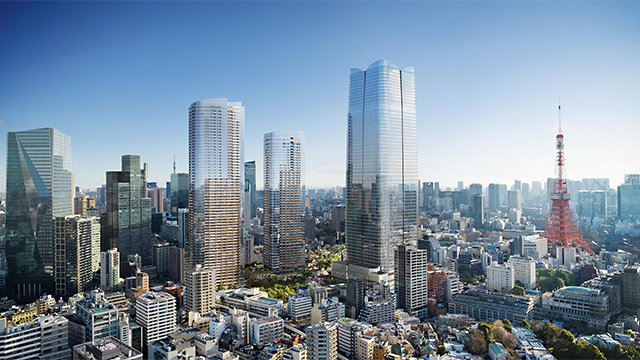
Japanese developer Mori Building broke ground this month a 64-storey building project that would break height records in the country.
Rising up to 330 metres high above central Tokyo, the skyscraper will outrank the 300-metre-tall Abeno Harukas building in Osaka as Japan’s tallest. The project is set for completion in March 2023.
The skyscraper will be part of an 81,000-square-metre urban regeneration development in the Japanese capital’s Azabudai-Toranomon district. Set to include one of the city’s largest international schools, plus a luxury hotel and hospital, the project is aimed at revitalising an area of Tokyo as large as New York’s Rockefeller Center.
The redevelopment is expected to set Mori Building back by about USD5.5-5.6 billion. With cutting-edge seismic designs and technologies, the project will allow the expected 20,000 workers and 3,500 residents to “carry on living and working even in the event of a major disaster on the scale of the Great East Japan Earthquake,” Mori Building promised in a statement.
More: Hong Kong, Tokyo home to the world’s most expensive ultra-prime houses
The complex will have a total built area of 860,000 square metres. More than 210,000 sqm of office space will be on offer, on top of 1,400 residential units.
The “city-within-a-city” development is a “massive challenge” to Mori Building, CEO Shingo Tsuji said in a press briefing Thursday.
“While there is competition among cities, we need to offer more international-standard offices and housing in Tokyo,” he was quoted as saying.
A skyscraper being planned by rival developer Mitsubishi Estate is likely to snatch the height title, however. The 390-metre project is set for completion in 2027.
Recommended
Gulf property markets trade panic for prudence
War upends West Asia, but property markets from Dubai to Riyadh refuse to break and attempt to regain their footing
Is China’s housing market finally turning a corner?
Shanghai’s property revival raises hopes, but falling prices elsewhere point to a long recovery
Opportunity or trap? What Washington’s high-tech hub outside Manila means for Philippine property
The New Clark City Economic Security Zone promises billions in investment, but at what cost to Philippine sovereignty?
What Japan’s policy rate hike means for its property market
After decades of near-free borrowing, the country's policy rate is starting to reshape the calculations behind property investment