Smart and sustainable cities: lecture 1
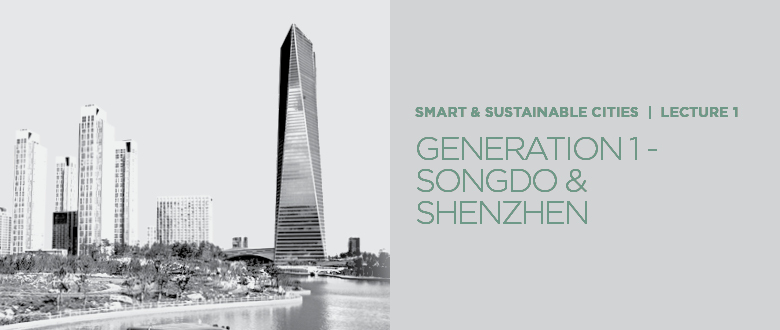
When one thinks of what a Smart City is, the natural inclination would be to a Utopian (or dystopian) vision — largely based on technology — specifically Information and Communication Technology (ICT) and the Internet of Things (IoT). It imagines a future where lives are made easier and more productive — thanks to technology. However, it is easy to overlook the important roles governance, culture and community play in enabling smart practices to take place. Furthermore, as the needs of the city dwellers around the world vary, so too do definitions of what makes a Smart City.
In this three part lecture series, we consider three generations of Smart City case studies from around the world — investigating their unique characteristics and key smart innovations and design principles, and ultimately ask whether such environments really enhance our daily lives. In Lecture 1 of the series, we investigate First Generation Smart Cities Songdo and Shenzen.
To view the video, please visit pomeroyacademy.sg/course/smart-and-sustainable-cities-lecture-1/. Watch the second and third parts here
Recommended
Investors double down on Jakarta despite Nusantara’s political rise
Density, demand, and capital flows continue to anchor real estate momentum in Greater Jakarta
Hong Kong’s deadliest blaze in decades triggers stricter safety rules
But enforcement is the real test

A conversation with ThirdHome founder Wade Shealy
How luxury exchange reshapes home ownership, travel, and asset use
Trade politics and domestic fragility test the Philippines’ property market
How global uncertainty and internal divisions are redrawing the outlook