Singapore real estate attracts foreign buyers, mostly Chinese nationals
Singapore is a preferred destination for setting up regional headquarters for ASEAN and Asian business opportunities
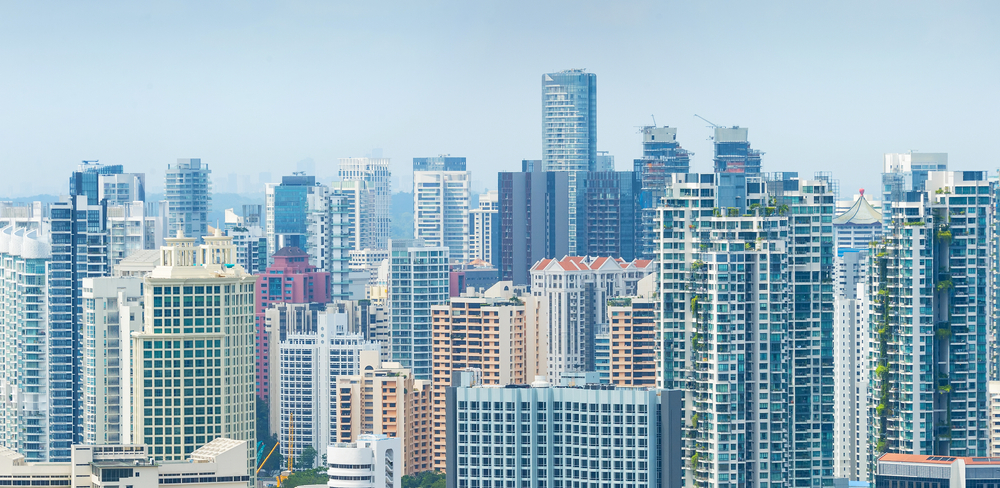
Singapore’s economy went up by 4.4 percent YoY in Q2 2022, according to the Global Property Guide. This was supported by the manufacturing sector, as well as the construction and services sectors
In contrast to the prior year’s 4.6 percent growth, real estate prices countrywide only increased by a moderate 3.7 percent YoY in Q2 2022. Quarterly, house prices grew by 1.6 percent.
From 2016 to 2021, Singapore’s house prices increased by approximately 20 percent (inflation-adjusted), following a three-year decline of nearly 10 percent.
Due to COVID-19-related construction delays, hundreds of public housing apartments in Singapore are being sold for more than SGD1 million (USD716,000).
More than 80 percent of Singaporeans now own their homes, which is one of the highest percentages in the world, reported Rappler. This can be attributed to the public housing program in the city-state, which offers government-built apartment units to residents on a 99-year lease.
A resale market has developed since ownership can be transferred to citizens and permanent residents after five years. Depending on size and location, some apartments that were initially bought for approximately SGD500,000 (USD355,354) are now selling for twice that amount.
Meanwhile, ASEAN Briefing reported that Singapore-based OrangeTee & Tie noted that mainland Chinese bought 391 condominiums in the city-state in Q2, up from 281 in Q1.
More: Singapore’s office & hospitality sectors recover in Q2 2022
Chinese citizens are predominantly interested in luxury properties, according to Christine Sun, senior vice-president of research and analytics at OrangeTee & Tie. she added that is also an increase in the number of high-net-worth Chinese buying property, especially newer luxury flats.
In addition, Singapore is a preferred destination for setting up a regional headquarters for ASEAN and Asian business opportunities. In addition to its favourable tax and legal systems, the city-state has attracted more than 37,000 international companies and 7,000 multinational companies, making it a global finance hub.
The Property Report editors wrote this article. For more information, email: [email protected].
Recommended
Is China’s housing market finally turning a corner?
Shanghai’s property revival raises hopes, but falling prices elsewhere point to a long recovery
Opportunity or trap? What Washington’s high-tech hub outside Manila means for Philippine property
The New Clark City Economic Security Zone promises billions in investment, but at what cost to Philippine sovereignty?
What Japan’s policy rate hike means for its property market
After decades of near-free borrowing, the country's policy rate is starting to reshape the calculations behind property investment

A conversation with the head of Vietnam’s Green Building Council on the cost of doing nothing
The VGBC’s Douglas Snyder argues that the real cost developers should fear isn’t building green. It’s failing to do so