Japan’s cities boom as rural towns hollow out
Record prices collide with a very different reality in the countryside, where millions of homes sit abandoned as the forces reshaping Japan’s property market pull in opposite directions
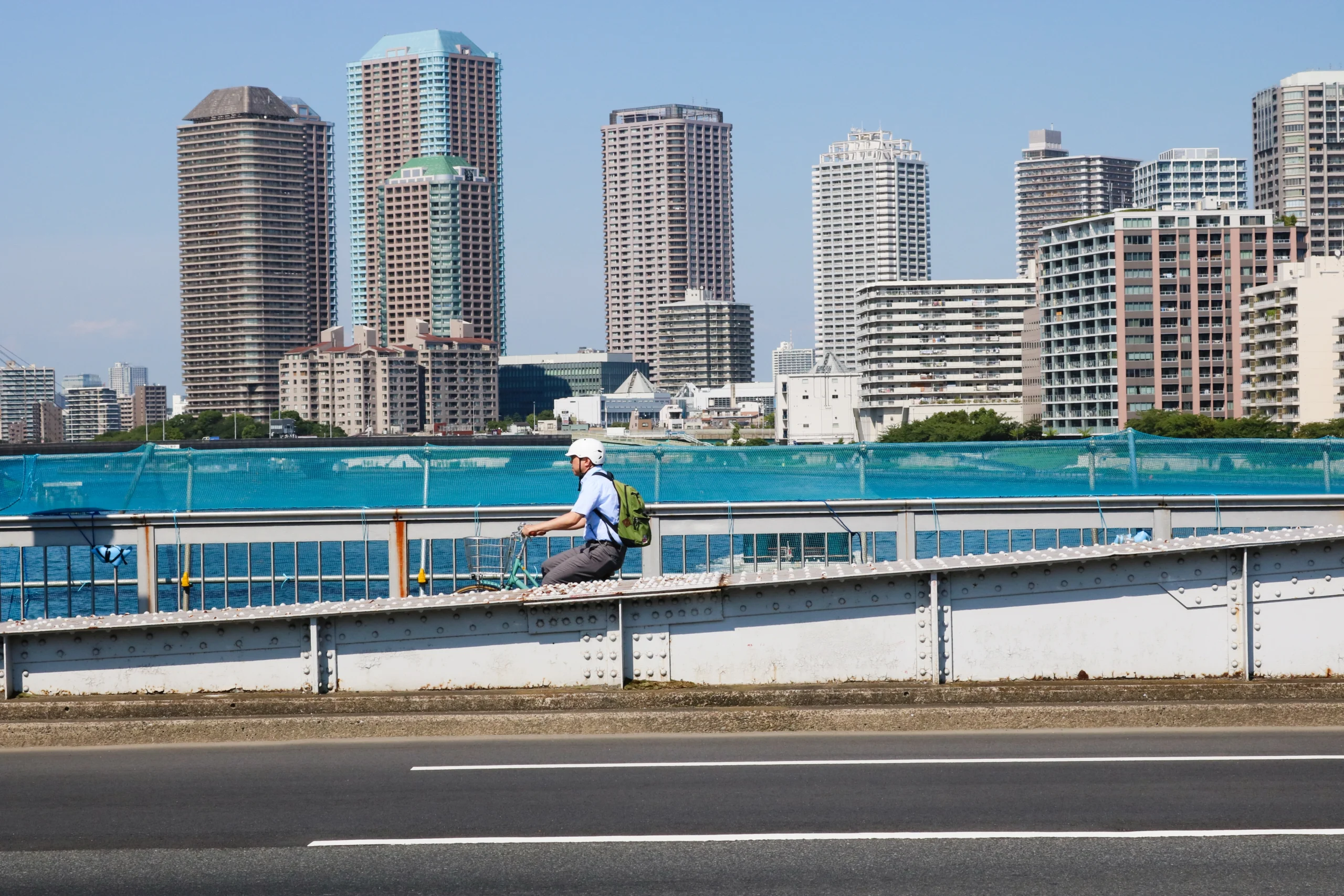
Japan’s property market is becoming increasingly defined by two sharply contrasting realities. In Tokyo and Osaka, land values are climbing, condominium prices have reached record highs, and developers are grappling with soaring construction costs. Beyond the country’s major cities, however, entire neighbourhoods are slowly emptying, leaving millions of homes abandoned as Japan’s population continues to shrink.
The contrast has rarely been starker. According to the latest official figures, Japan has nine million vacant homes, or 13.8% of its housing stock. Yet in the country’s largest cities, buyers face some of the highest property prices in a generation as redevelopment, foreign investment, labour shortages, and rising building costs continue to drive values higher.
The divergence is becoming one of the defining features of Japan’s real estate market. While policymakers struggle to revive declining rural communities, investors are increasingly focused on the country’s largest metropolitan centres, where major infrastructure projects, new tourism developments, and the rapid expansion of artificial intelligence are creating fresh growth opportunities.
In March, Japan’s land ministry says land prices had risen for a fifth consecutive year, with gains widening in Tokyo and Osaka. Tokyo’s own data showed residential land prices in the capital’s 23 wards rose 9%, while commercial land increased 13.8%.
In April, the Real Estate Economic Institute says the average price of a new condominium in Tokyo’s 23 wards reached a record JPY137.84 million (USD861,000) in 2025, reflecting rising construction costs and a shortage of supply.
“The defining trend in 2026 has been the continued rise in residential prices alongside a constrained supply environment, despite tighter financing conditions, driven by the yen’s depreciation that has reinforced inward investment,” says Christine Li, head of Asia Pacific research at Knight Frank. “Official land price data shows sustained nationwide increases, with particularly strong appreciation in major urban centres such as Tokyo and Osaka.”
The weak yen has pushed up the cost of imported materials and energy while making Japanese real estate more attractive to overseas investors holding stronger currencies. At the same time, labour shortages have increased construction costs and extended project timelines, adding further pressure to prices.
“Foreign investment is coming from both institutional investors, who are yield-focused, and individuals, who buy for the lifestyle,” says Eddie Guillemette, CEO of Midori no Ki, a real estate company based in Niseko. “However, high prices are also being driven by soaring raw material and construction labour costs, and land price appreciation driven by redevelopments.”
The defining trend has been the continued rise in residential prices alongside a constrained supply environment, despite tighter financing conditions, driven by the yen’s depreciation
Those redevelopment projects are transforming major urban centres, particularly Osaka, where billions of dollars are being invested in new commercial districts and tourism infrastructure. At the same time, developers are racing to secure land for data centres as artificial intelligence drives demand for digital infrastructure, while major transport projects are expected to reshape residential demand in parts of Tokyo over the coming decade.
But construction costs show little sign of easing. Japan’s construction inflation is forecast to remain high, at 5.6% in 2025 and 5.3% in 2026, driven by “persistent labour shortages, material cost volatility, and ongoing capacity constraints,” according to Turner & Townsend. Savills estimates reinforced-concrete condominium construction costs in Tokyo were about 35% higher in October 2025 than they were in October 2019. Reuters reported in June 2026 that Japan’s import prices had jumped 25.5% year-on-year, with wholesale inflation driven by petroleum products, chemicals, and non-ferrous metals.
Recent geopolitical tensions have added further uncertainty to global supply chains. “There are big delays for a lot of building materials because of the war,” says Anton Wormann, founder of Japandi Houses, which renovates abandoned homes. “You cannot find glue or wallpaper or a certain type of paint. A lot of big developers are now in big trouble because they cannot finalise their initial investments. A lot of these big developers are dumping big projects they were about to take on. That’s the biggest change over the past few months.”
Looking ahead, Guillemette believes policy could become the biggest risk to Japan’s urban property boom. Japan places few restrictions on foreign purchasers, but opposition parties have begun advocating tighter controls, including possible limits on foreign acquisitions and taxes on vacant foreign-owned homes. “If there is a sudden change in taxation, redevelopment rules, or limitations on who can purchase a property, market pricing will react negatively, and liquidity can dry up,” he says. “The more predictable risk factors to look at in both the short and long run are rising interest rates, causing a strengthening currency, and less liquidity.”
Yet while Tokyo, Osaka, other major cities, and centres such as Niseko in Hokkaido continue to attract capital, development, and new residents, a very different housing market exists beyond the metropolitan skyline. Across much of rural Japan, demand has evaporated altogether. Villages continue to lose population, younger residents leave for the cities, and millions of homes have been left standing empty, creating one of the developed world’s largest inventories of vacant housing.
For some buyers, those abandoned homes represent an extraordinary opportunity. “I’ve purchased homes for about USD15,000, an hour away from Tokyo,” says Wormann. “That means you could rent a nice apartment in Tokyo for a few months for that price, or you could own a house in the countryside.” The bargains, however, come with significant challenges. “There are a lot of complications,” he says. “It requires a lot of footwork, boots on the ground, cultural knowledge, and language. You need to have a strong community of people who can execute on your ideas or have a lot of time.”
Related: 6 projects raising the bar for workplaces across Asia
Japan’s vacant-home problem dates back to the country’s post-war industrial boom, when millions of people migrated from rural communities to the factories, offices, and universities of the country’s expanding cities. Japan’s rural population fell from around 50% in 1945 to less than 20% by 1970. The collapse of Japan’s asset bubble in the 1990s accelerated the trend. As property values tumbled and economic growth stalled, many rural homes became worth less than the cost and effort required to maintain them.
To tackle the problem, the government has introduced legislation giving municipalities greater powers to identify dangerous vacant homes, order owners to repair or demolish them, and, in some cases, remove tax breaks that had encouraged owners to leave ageing properties standing. Many local governments have also launched “akiya banks” to connect buyers with vacant homes, while others offer renovation subsidies or even free properties to people willing to relocate. The initiatives have helped attract a growing number of Japanese and overseas buyers drawn by traditional architecture, larger homes, and a slower pace of life. Some see business opportunities in restoring neglected properties into guesthouses, cafés, or holiday homes. Others are looking for an affordable place to settle.
Even so, the scale of the challenge remains immense. Japan’s population has fallen to around 122 million, roughly four million fewer people than it had two decades ago, and many rural communities continue to age and shrink. “There is no real good solution to it,” says Wormann. “It requires a lot of effort to solve this problem. It’s not only about the abandoned homes. It’s about the community and everything else that’s going on around.”
The contrast between Japan’s booming cities and its struggling countryside is becoming increasingly pronounced. In Osaka, redevelopment projects are reshaping the city as preparations continue for the country’s first integrated casino resort, while artificial intelligence is fuelling a scramble for data centre sites around Tokyo, Osaka, and emerging regional hubs. In the capital, major transport investments, including the Haneda Airport Access Line, are expected to create new property hotspots over the next decade.
Japan’s property story is therefore no longer defined by a single trend. Instead, it is becoming a tale of two markets: one driven by redevelopment, investment, and rising values, the other by depopulation, abandonment, and the difficult task of finding new life for millions of empty homes.
This article was originally published on asiarealestatesummit.com. Write to our editors at [email protected].
Recommended
Opportunity or trap? What Washington’s high-tech hub outside Manila means for Philippine property
The New Clark City Economic Security Zone promises billions in investment, but at what cost to Philippine sovereignty?
What Japan’s policy rate hike means for its property market
After decades of near-free borrowing, the country's policy rate is starting to reshape the calculations behind property investment

A conversation with the head of Vietnam’s Green Building Council on the cost of doing nothing
The VGBC’s Douglas Snyder argues that the real cost developers should fear isn’t building green. It’s failing to do so

These 6 projects are among Asia’s greenest in 2026
Proof that better buildings are defined as much by how they operate as how they look