Inside Singapore’s industrial property market
Leasing activity in Singapore’s industrial market increased by 4.9 percent year-on-year (YoY)
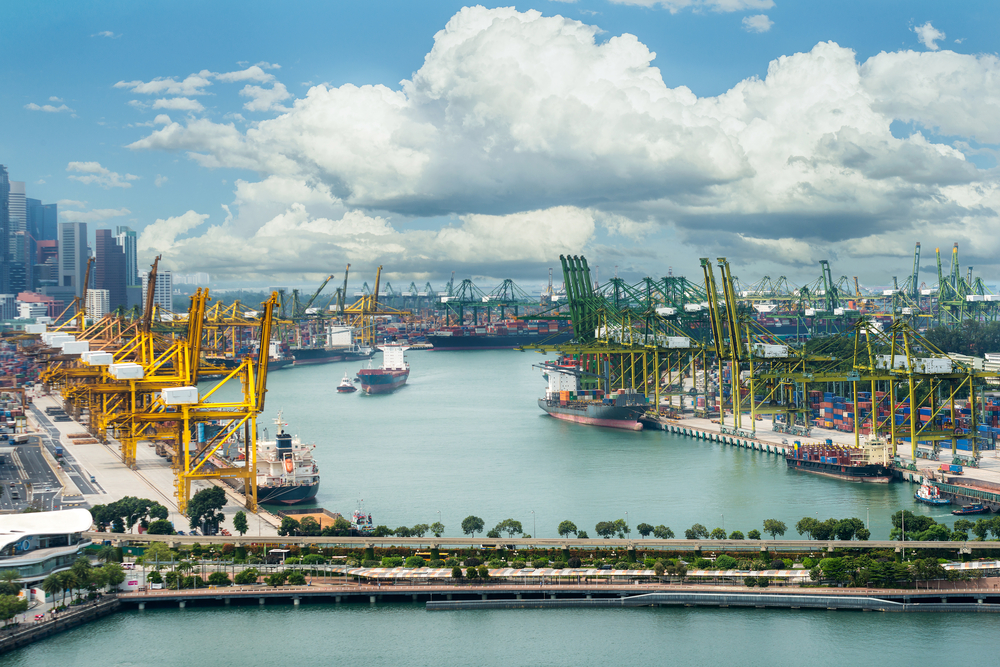
As supply chain concerns remain a top priority, Asia Pacific’s industrial real estate sector appears destined to be the winner in commercial real estate in 2022, and for the third consecutive year, according to CBRE’s 2022 Investor Intentions Survey. The industry has grown steadily since 2021, thanks to rapid e-commerce adoption during the pandemic, which has translated into increased demand for logistics space.
Additionally, Investors seeking higher returns are increasingly looking for core-plus and value-added opportunities in logistics facilities that can be upgraded. They are also actively pursuing automation and other technology advancements in their logistics facilities as a result of the current e-commerce boom and its emphasis on speed and efficiency of supply chain operations, shared RETalk Asia.
According to Knight Frank, leasing activity in Singapore’s industrial market increased by 4.9 percent year-on-year (YoY) — 2,140 leases, 1.4 percent quarter-on-quarter (QoQ) — in January and February 2022. Also, during this time, 1,557 tenancies were recorded in the multi-user factory segment, a slight decrease of 0.4 percent YoY.
Knight Frank Singapore’s head of capital markets Daniel Ding shared that strata industrial space maintained its popularity amongst businesses because of its price quantum.
More: Singapore’s economy goes up 3.4% in Q1 2022
Moreover, Cushman & Wakefield mentioned that prime logistics properties went up three percent QoQ because of steady rental increases in Q1 2022.
Factory rents have gradually climbed as a result of low vacancy rates, as the bulk of supply is projected to operate in the second half of the year, reported the Singapore Business Review. Despite the tight vacancy situation, city business parks continued to grow steadily.
Rents for business parks are predicted to rise in 2022 as a result of limited supply.
Because of the steady expansion of the biomedical, technology, manufacturing, and logistics sectors, Wong Xian Yang, research head at Cushman & Wakefield Singapore, believes that there will be continued solid demand for high-tech, prime logistics, and warehouse facilities. The exponential growth of e-commerce and business digitalisation exacerbated this.
Singapore’s GDP grew by 7.6 percent in 2021, which can be attributed to the manufacturing industry’s 13.2 percent YoY increase for the entire year.
The Property Report editors wrote this article. For more information, email: [email protected].
Recommended
Industrial heat meets residential cool across Malaysia real estate
A server-farm boom powers Malaysia’s property market while residential recalibrates around affordability and caution

Young buyers hold the key to unlocking Bangkok’s empty homes
The Thai capital's skyline still rises, but the market seems out of sync with its next generation of buyers
Investors double down on Jakarta despite Nusantara’s political rise
Density, demand, and capital flows continue to anchor real estate momentum in Greater Jakarta
Hong Kong’s deadliest blaze in decades triggers stricter safety rules
But enforcement is the real test