Hong Kong’s economy recovers ahead of its 25th year since returning to China
Hong Kong also ranked fifth in an annual global ranking of the world’s most competitive countries and regions
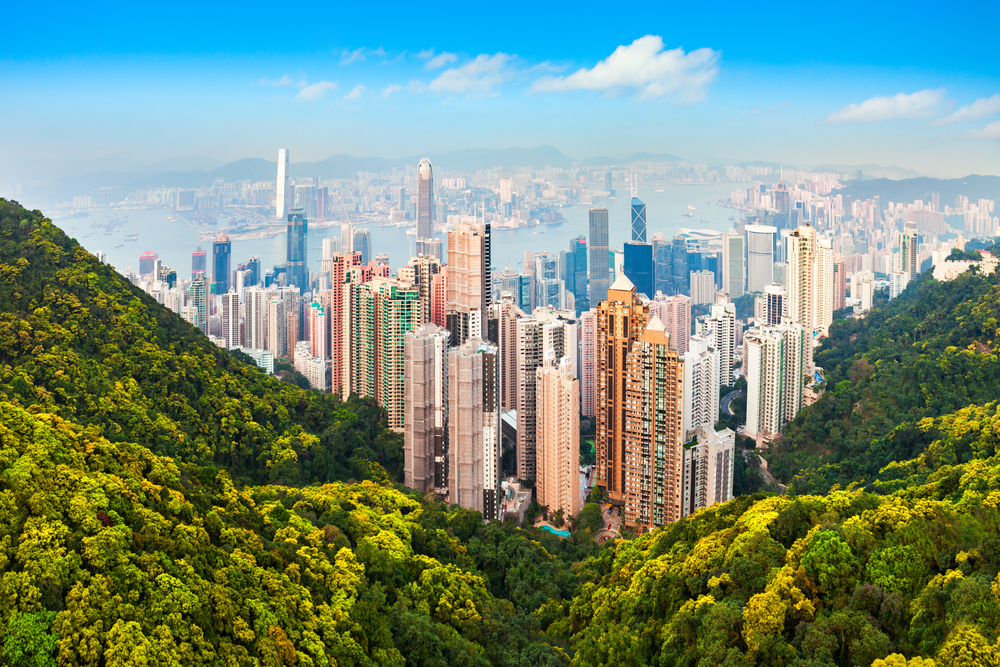
The 25th anniversary of Hong Kong’s return to China will be celebrated on 1 July 2022. CGTN looked at some major indicators to see how Hong Kong’s economy and society have changed since the handover.
In the last 25 years, Hong Kong’s overall economy has more than doubled. GDP has increased from HKD1.37 trillion (~USD176 billion) in 1997 to HKD2.89 trillion (~USD368 billion) in 2021.
Furthermore, The Star reported that Hong Kong climbed to the fifth spot this year in an annual global ranking of the world’s most competitive countries and regions. This is due to its improved economic performance despite the ongoing global pandemic.
In terms of economic competitiveness, Hong Kon’s economic performance improved significantly, especially in the domestic economy subfactor and international trade.
More: Hong Kong’s economy projected to grow 2–3.5% in 2022
Upon further analysis, it was revealed that international trade was a major contributor to the economy. According to the World Trade Organization (WTO), in 2020, Hong Kong was the world’s sixth-largest merchandise trade exporter. Hong Kong was Asia’s sixth-largest exporter of commercial services and third-largest exporter of merchandise products.
Since 1985, Hong Kong’s largest trading partner has been Mainland China. From 1978 to 2020, its contributions to Hong Kong’s total global trade went from 9.3 percent to 51.8 percent, reported CGTN.
It also has a strong trade relationship with Taiwan. According to Hong Kong’s Trade and Industry Department, re-export trade between the two economies through Hong Kong amounted to HKD470.7 billion (~USD61.1 billion) in 2020.
Mainland China fell to the 17th spot, reversing a recent increasing trend, according to the report, due to a sluggish economic recovery exacerbated by the Zero-COVID policy.
Taiwan rose one spot to seventh due to its consistent performance in the government efficiency factor, which contributed to improvements in tax policy, institutional frameworks, and business regulations.
The Property Report editors wrote this article. For more information, email: [email protected].
Recommended
Opportunity or trap? What Washington’s high-tech hub outside Manila means for Philippine property
The New Clark City Economic Security Zone promises billions in investment, but at what cost to Philippine sovereignty?
What Japan’s policy rate hike means for its property market
After decades of near-free borrowing, the country's policy rate is starting to reshape the calculations behind property investment

A conversation with the head of Vietnam’s Green Building Council on the cost of doing nothing
The VGBC’s Douglas Snyder argues that the real cost developers should fear isn’t building green. It’s failing to do so

These 6 projects are among Asia’s greenest in 2026
Proof that better buildings are defined as much by how they operate as how they look