Hainan reassigns land for 620,000 homes for industrial use
Loss of revenue for Chinese province, gain of support from President Xi Jinping

Enormous parcels of land in Hainan Island, previously designated for residential development, will be reassigned for industrial use, government officials announced Monday.
The move is in keeping with Beijing’s vision of transforming the island, part of China’s southernmost province, into the country’s largest free-trade zone (FTZ).
Covering 20.7 million square metres, the land would have yielded about 620,000 homes, representing a gross floor area of 62 million square metrEs.
The Hainan government is expected to collect far less revenues with the reassignment as industrial land prices in the island are merely 12 percent of those for commercial and residential land.
At an average price of CNY1,000 (USD148) per square metre, the sale of land for residential use would have earned the Hainan government CNY62 billion or 92 percent of its 2017 fiscal revenue.
“Hainan is exploring a path that will help shake off an addiction to land sales. It wants to foster industries that steadily contribute towards taxes, which is a more sustainable path,” Zhao Xiuchi, a professor at Capital University of Economics and Business in Beijing, told the South China Morning Post.
The loss of revenue is a tradeoff for support from President Xi Jinping, who announced in April that Hainan would be declared a free-trade zone. Priority will be given to tourism and technology, among other sectors, in the island widely known as the “Hawaii of China”.
Recommended
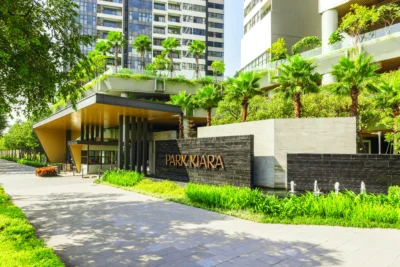
Park Kiara in Hanoi raises the bar for sustainable urban living
Park Kiara in Hanoi is a repudiation of low-density, car-dependent suburban sprawl
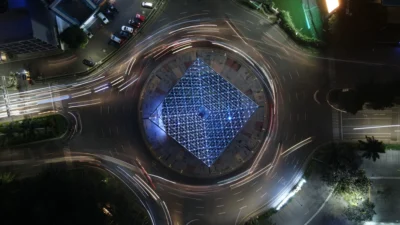
6 reasons Bekasi is rising as Greater Jakarta’s next hotspot
One of Greater Jakarta’s rising stars is prospering, thanks to ample recreation and a contingent of desirable housing projects

6 developments driving Asia’s green real estate shift
Developers are being incentivised to push a green agenda into daring new realms
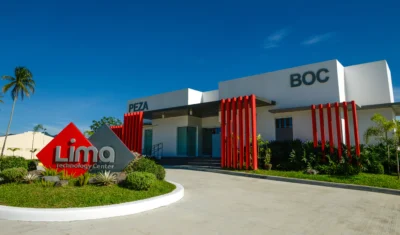
The Philippines’ LIMA Estate drives sustainable industrial growth
LIMA Estate models a citywide vision that uplifts workers while appealing to climate-conscious employers