Is China’s housing market finally turning a corner?
Shanghai’s property revival raises hopes that China’s housing crisis is easing, but falling prices elsewhere point to a long and uneven recovery
When sales began at the new Greentown Shanghai Yuehaitang development in early August, the response exceeded expectations. Despite average prices CNY2,000 (USD300) per square metre above those of local competitors, all 228 units sold within days, with the project more than four times oversubscribed. Properties fetched an average of CNY62,198 per square metre, a local record.
The project’s distinctive above-ground, damp-resistant design and accompanying marketing campaign certainly helped, as did its prime location just 200 metres from a newly opened station on an extension of Metro Line 2. From Greentown Shanghai Yuehaitang, downtown Shanghai is a direct 35-minute subway ride away.
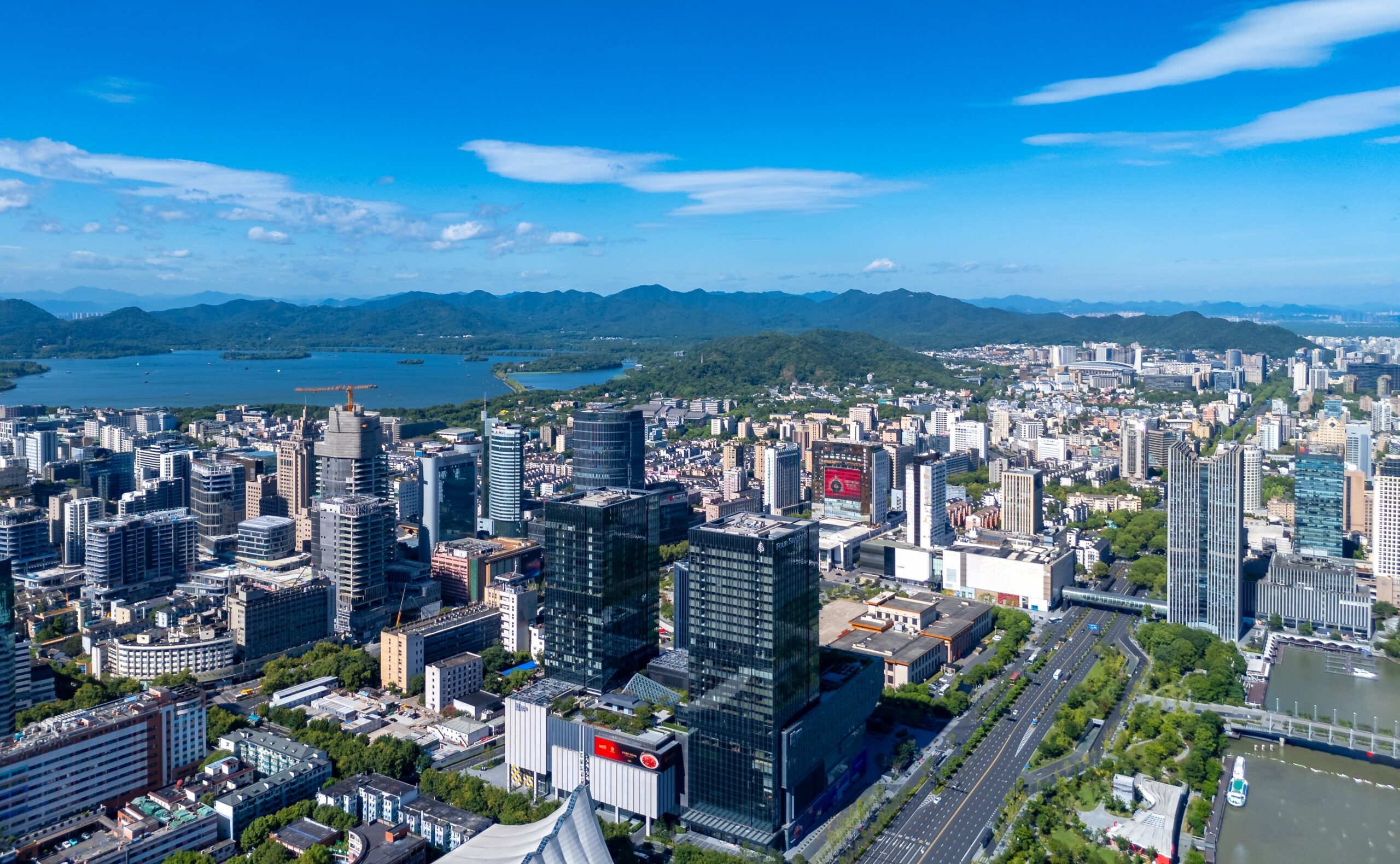
That a project so far from the centre of China’s most populous city sold out so quickly, and attracted such strong buyer interest, is one of several recent signs that a slow, uneven revival in the residential market may be underway. Shanghai is one of the few major Chinese cities showing signs of sustained price growth and buyer confidence as the country struggles to emerge from its worst housing crisis in a generation.
But is the market finally bottoming out and beginning a sustained recovery, or is this just another false dawn?
Prices of new homes in Shanghai rose 3% year-on-year in July, more than in any other Chinese city, while prices for larger units of over 144 square metres climbed 5.5%, according to the latest data from China’s National Bureau of Statistics (NBS). Shanghai was also one of only five major cities to record month-on-month price growth for second-hand homes in July, with prices rising 0.3%.
Official data also showed that 147,000 second-hand homes changed hands in Shanghai during the first half of 2026, up 13% year-on-year.
“The price plus volume recovery together is different from previous false dawns,” says James Woo, head of valuations for China at Colliers. “The bottoming out is real but city-specific, not national.”
Beyond Shanghai, it remains difficult to argue that markets in most major cities have reached the bottom. Shenzhen has been the next-best performer, Woo says, with new-home prices climbing 7% in the first half of this year, second-hand home prices up 6.4% over successive months, and land premiums exceeding 150% in core districts.
Guangzhou is also “quietly stabilising”, posting the strongest month-on-month gains in the country’s second-hand market, at 0.4%.
Among Tier 2 cities, Hangzhou remains by far the strongest market, with new-home prices rising 2.6% year-on-year in July, the best performance after Shanghai, according to NBS data. Of the other cities surveyed, only Shenyang and Hefei, both up 0.3%, recorded annual price growth.
Nationally, therefore, just four of the 70 largest cities recorded rising new-home prices in the year to the end of July; the other 66 reported declines.
Yet after six years of market pain, signs that the market may finally be turning the corner have been greeted with both hope and caution.
In late May, a Reuters housing market poll found that respondents expected Chinese home prices to rise by an average of 0.3% in 2027, marking the poll’s first positive forecast for the following year.
Other analysts have since issued cautiously positive forecasts. “We expect home prices to drop at a more moderate pace in 2026 and bottom out by 2027-2028,” says UOB macroeconomic analyst Ho Woei Chen.
The Chinese government and state media have continued to strike a more positive tone, promoting central government measures and apparently seeking to restore confidence in the battered market.
In late April, the Politburo used stronger language than before in a policy statement, speaking of “striving to stabilise the real estate market”. It reiterated similar wording after its latest meeting in late July.
Earlier in July, Huang Yu, executive deputy president of the China Index Academy, spoke of “continued bottoming out and intensified differentiation”, acknowledging the increasingly varied pace of recovery expected across China for the rest of this year and beyond.
NBS Deputy Director Mao Shengyong told journalists in mid-July: “Data from the first half of the year shows that policies are gradually taking effect, and the real estate market has seen positive changes.”
Mao cited four consecutive months of price rises in Tier 1 cities before July and a “narrowing of the overall decline in residential property prices” in Tier 2 and Tier 3 cities.
Throughout much of 2026, China’s news media have promoted the idea that the market is bottoming out. State television network CCTV repeatedly referred to a xiaoyangchun, or “mini-boom”, following Chinese New Year in February.
Whether China’s residential market is turning the corner remains to be seen, particularly in smaller cities, Woo says.
“For 2026 as a whole, I’d expect Tier-1 city new home prices to approach year-on-year flattish [price trends] by year-end, with Shanghai clearly positive,” he says.
“The national picture will remain negative but with declining magnitude. The real question for 2027 is whether Tier-1 momentum can sustain without fresh policy stimulus, and whether Tier-2 cities like Hangzhou, Chengdu, and Suzhou can follow the Tier-1 lead.”
This article was originally published on asiarealestatesummit.com. Write to our editors at [email protected].
Recommended
Is China’s housing market finally turning a corner?
Shanghai’s property revival raises hopes, but falling prices elsewhere point to a long recovery
Opportunity or trap? What Washington’s high-tech hub outside Manila means for Philippine property
The New Clark City Economic Security Zone promises billions in investment, but at what cost to Philippine sovereignty?

What Japan’s policy rate hike means for its property market
After decades of near-free borrowing, the country's policy rate is starting to reshape the calculations behind property investment

A conversation with the head of Vietnam’s Green Building Council on the cost of doing nothing
The VGBC’s Douglas Snyder argues that the real cost developers should fear isn’t building green. It’s failing to do so