New home sales soar in China’s Silicon Valley for the second consecutive weekend
Despite the local authority’s proposal to build affordable public housing units
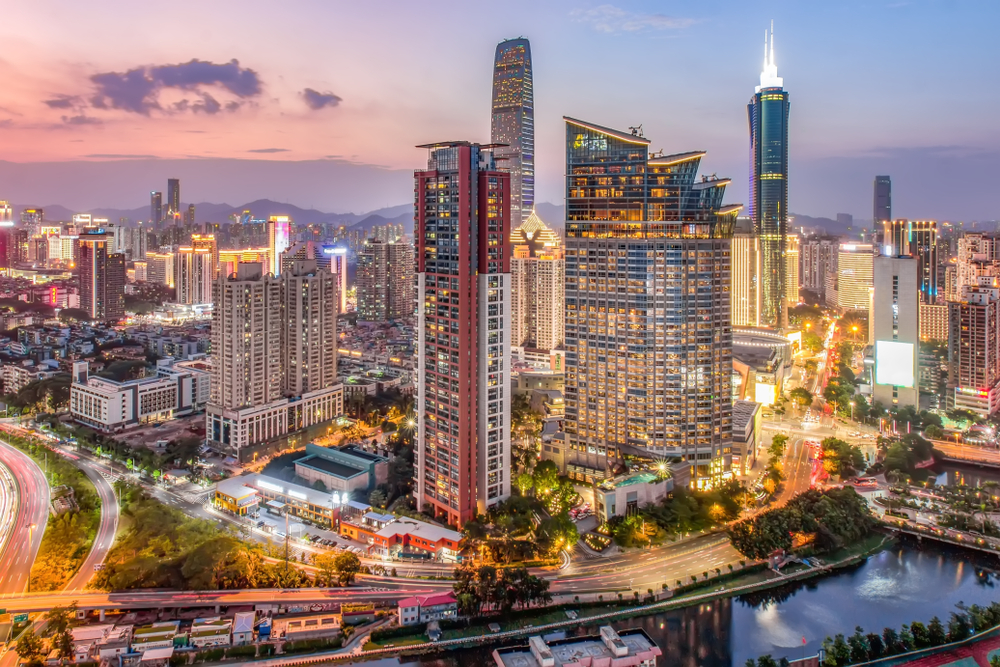
Property buyers in Shenzhen have been scrambling to purchase newly-completed residences, boosting new homes sales for two weekends in a row. According to South China Morning Post, the number amplified shortly after the government’s announcement to provide one million cheap public housing units capped at CNY50,000 (USD7,148) per square metre.
Property consultant CBRE said that the strong demand for housing indicates how Shenzhen — also known as the Silicon Valley of China where tech giants DJI, Tencent Holdings, and Huawei Technologies are based — has become one of the five most expensive cities to live in.
The average new home price for major cities in China surged by 0.5 percent in September from a month before, which is the market’s slowest pace since February, based on the National Bureau of Statistics.
However, data gathered by one of the biggest property firms Midland Holdings revealed that Shenzhen managed to elude the decline, when the median home rate in the Bao’an district, less than an hour away from downtown Shenzhen, rose by 9.6 percent in the third quarter to CNY54,000 per square metre compared to a year before.
More: Chinese government constructs 13 public housing projects to cater to Shenzhen residents’ needs
In the hopes of making the housing market more affordable for residents, Shenzhen’s local government announced their plan to build one million public housing flats, which will be capped at CNY20,000 to CNY30,000 per square metre in the areas near the city centre.
Nevertheless, the buyers did not give in to the quick progression of the plan.
Analyst at Centaline Property Agency Zhang Dawei asked, “Do you want to wait for plans that you have no idea whether will be successful? What happens if you cannot get an affordable home even in a couple of years?”
The ambitious plan has left residents unanswered questions, such as the quality of the housing units, the applicants’ qualifications, and if the supply target is indeed attainable.
Recommended
Is China’s housing market finally turning a corner?
Shanghai’s property revival raises hopes, but falling prices elsewhere point to a long recovery
Opportunity or trap? What Washington’s high-tech hub outside Manila means for Philippine property
The New Clark City Economic Security Zone promises billions in investment, but at what cost to Philippine sovereignty?

What Japan’s policy rate hike means for its property market
After decades of near-free borrowing, the country's policy rate is starting to reshape the calculations behind property investment

A conversation with the head of Vietnam’s Green Building Council on the cost of doing nothing
The VGBC’s Douglas Snyder argues that the real cost developers should fear isn’t building green. It’s failing to do so