Timor-Leste real estate takes off as nation joins ASEAN
Early signs of a property market emerge amid land-title reform and cautious foreign interest
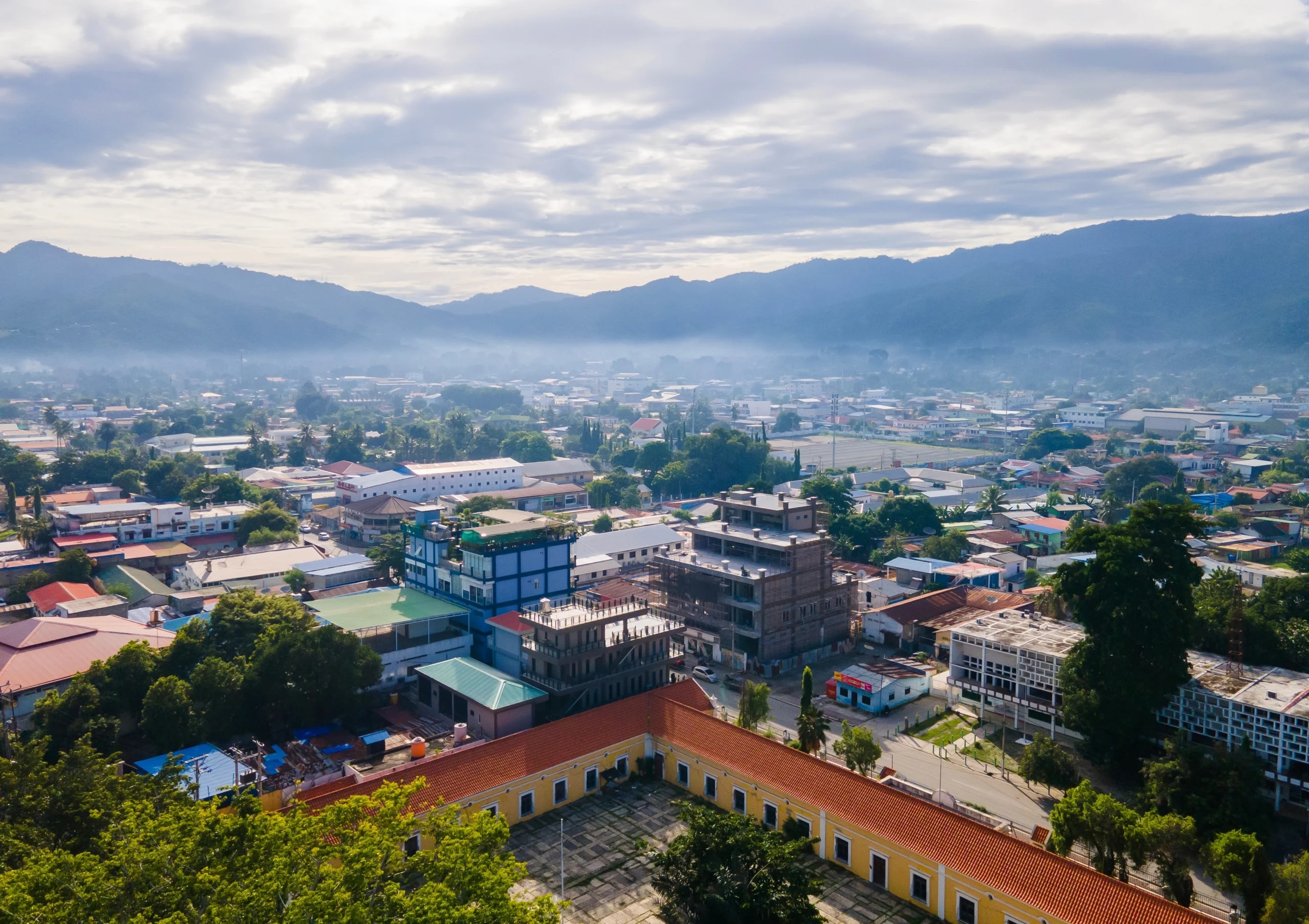
The renderings for Marina Square, a twin-tower, mixed-use development, appear straight out of Singapore. The project is ultra-modern, 23 storeys tall, and features luxurious serviced apartments with a communal infinity pool overlooking the ocean. The developer, A-Smart Holdings Limited, is even based in Singapore and listed on the SGX, operating in partnership with Vico Construction Pte Ltd, also of the city-state.
Yet this is not a project in ASEAN’s wealthiest nation. Marina Square is instead under construction in Dili, the capital of Timor- Leste, the bloc’s newest member and the one with its lowest per capita income, at just USD1,343 in 2024, according to the World Bank.
Having gained full membership of ASEAN in October after a lengthy 14-year accession process, Timor-Leste has become the region’s newest market. But a lack of land titles and an economy overly reliant on the energy sector mean the local investment climate and property market remain fringe rather than frontier.
ASEAN membership means Timor-Leste now benefits from the bloc’s free trade area. This includes zero tariffs on most goods, greater labour mobility, including overseas job opportunities, and increased access to funding and investment channels such as the ASEAN Infrastructure Fund.
Still, entry into the bloc is so recent that tangible impacts remain to be seen, at least in the short term, says Ricardo Alves Silva, a partner at the Dili office of Portuguese law firm Miranda Law.
“There has clearly been increased foreign investor interest over the last couple of years in Timor-Leste, including in the real estate market, but I wouldn’t say it is ASEAN-driven yet,” says Silva. “That said, we are anticipating a significant increase in interest from investors from ASEAN member states over the next 12 months.”
In the absence of a developed property market, law firms in Timor-Leste provide many of the services a traditional real estate agency would offer elsewhere in the region. This is partly due to the complex legal pitfalls involved in a country where land and property ownership remains ill-defined following centuries of Portuguese colonial rule and a war of independence with Indonesia, now Timor-Leste’s ASEAN neighbour. During the conflict, land ownership documents were, in many cases, destroyed, in a similar vein to Cambodia during the Khmer Rouge period, another ASEAN country that has faced titling issues.
There are very few local agents or property agencies in Dili, and no multinational realtors at all. Mortgages and home loans are similarly rare. The consortium developing Marina Square, which includes local company EMG Group, instead offers an instalment plan whereby buyers pay a 1% downpayment, followed by a 29% payment two months later, and then staged payments as the project is completed.
Marina Square is due for completion at the end of 2026. In October, a published update showed a crane towering over what appeared to be the nearly completed base of the project. Its arrival on the Timorese property market is so eagerly anticipated that the developer routinely visits senior politicians to provide progress updates.
While the project points to Timor-Leste’s property future, the market’s foundations remain underdeveloped and difficult to navigate, particularly for foreign investors.
Elsa Freitas, director of the Dili branch of Singapore-based Wong Alliance Law Firm, tells Property Report that foreign investors rely on long-term leases, with no immediate prospect of foreign land ownership.
“The property law framework remains subject to ongoing and anticipated reform, largely because a comprehensive system of land titles issued under the Timorese legal regime has yet to be fully implemented,” says Freitas.
At Marina Square, foreign buyers can purchase a one-bedroom apartment for as little as USD117,000, but can only take ownership of the structure itself, not the land on which it is built.
Land titles remain the key obstacle for buyers. In September, when the World Bank released its latest economic update for Timor-Leste, estimating 4% GDP growth in 2025, the report again highlighted the country’s land rights issues. It argued that Timor-Leste should focus on modernising its land-titling and administration system, which continues to suffer from overlapping claims and presents significant investment risk.
“Land is one of Timor-Leste’s most valuable assets,” says David Freedman, World Bank Group resident representative for Timor-Leste. “An efficient system for land titling and secure and inclusive land rights would stimulate private investment, lifting growth, creating jobs, and helping reduce poverty.”
The IFC, part of the World Bank Group, is also involved in efforts to develop and promote Timor-Leste’s property market, working with the government to develop low-cost housing solutions, including a project on a 20-hectare site on the outskirts of Dili.
The IFC is also advising on housing finance and has invested in Timor-Leste’s largest microfinance institution, Kaebank Investimentu no Finansas (KIF). While it does not offer mortgages per se, the company does distribute small business and other loans, which in Timor-Leste are common sources of credit for purchasing property.
Silva of Miranda tells Property Report that there is significant local interest in social housing, with the government having recently approved a new roadmap for the development of affordable homes in Dili.
At the same time, the upper end of the market is also seeing increased activity with the launch of large, foreign-developed projects such as Marina Square, says Silva.
“There is clearly a trend towards the construction of quality higher- and middle-class apartment buildings and mixed-use developments,” he says. “It is still a nascent market, but with plenty of opportunities as the middle class grows and the city modernises.”
This article was originally published on asiarealestatesummit.com. Write to our editors at [email protected].
Recommended
Timor-Leste real estate takes off as nation joins ASEAN
Early signs of a property market emerge amid land-title reform and cautious foreign interest
Macau market weakness persists despite economic rebound signs
As Macau’s gaming revenues surge back to life, its residential property market remains stuck on a losing streak
Seoul’s luxury homes roar back on global demand and scarcity
Once cooled by demographics and policy, the South Korean capital's luxury housing market is surging again
South Asia’s property markets edge back from the brink
After years of turmoil, South Asia’s real estate sectors are stirring back to life, buoyed by reform and renewed investor confidence