South Korean exports grow 15% in first 10 days of March
On the back of strong exports, South Korea, Asia’s fourth-largest economy is on the mend
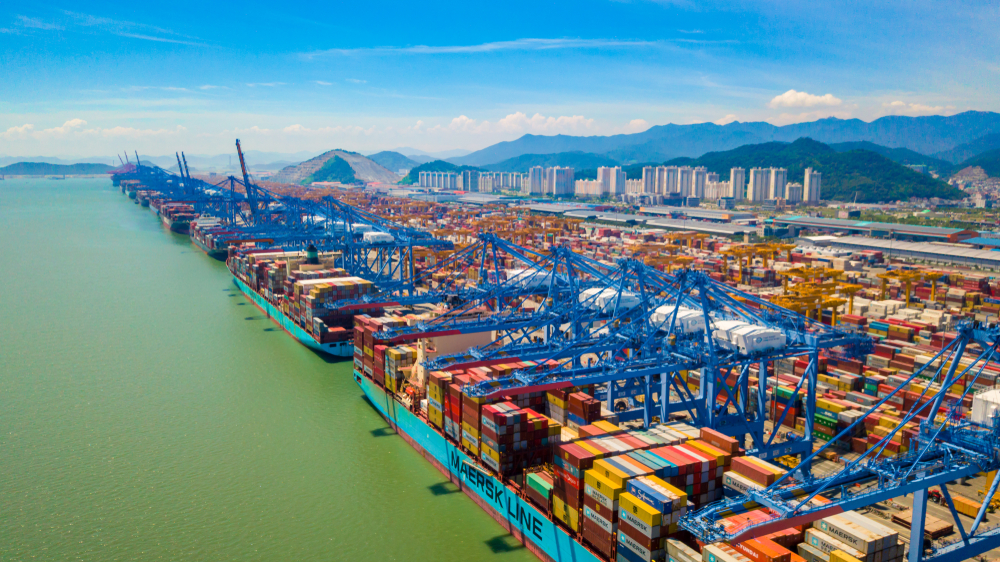
South Korea’s exports swung back to positive territory in February, marking the 16th consecutive month of export influx.
According to CNBC, it expanded 20.6 percent from 2021 to USD53.9 billion, beating the Reuters’ poll, which forecasted an 18.2 percent growth. Semiconductors exports increased by 24 percent year-on-year, while petrochemicals, oil, and steel products exports increased by 24.7 percent, 66.2 percent, and 40.1 percent, respectively.
In contrast, imports increased by 25.1 percent to USD53.1 billion, with crude oil, gas, and coal accounting for USD12.5 billion. The trade balance improved from a USD4.8 billion deficit in January to a USD0.8 billion profit in February.
Yonhap News Agency shared that during the first 10 days of March, South Korea’s exports grew 14.9 percent. Outbound shipments stood at USD18.7 billion compared to last year’s USD16.3 billion.
Moreover, imports gained 15.3 percent year-on-year to USD20.1 billion, resulting in a trade deficit of USD1.4 billion, according to data provided by the Korea Customs Service.
Semiconductors made up about 20% of total exports. Samsung Electronics Co., the world’s largest memory chip manufacturer, and its smaller rival SK hynix Inc. are the key contributors.
More: The effect of ICT exports in South Korea’s economic growth
Sales to China, South Korea’s largest trading partner, jumped 13.5 percent year-on-year while shipments to the US gained 7.2 percent.
On the back of strong exports, South Korea, Asia’s fourth-largest economy is on the mend.
Earlier this month, Hankyoreh reported that the country’s economy grew four percent in 2021, which was the highest growth rate recorded since 2010 when it rose to 6.8 percent.
Last year’s nominal GDP was KRW2.1 quadrillion (USD1.7 trillion), up 6.4 percent from 2020. The nominal GNI expanded by 6.9 percent in 2021, exceeding the nominal GDP growth rate of 6.4 percent.
The Property Report editors wrote this article. For more information, email: [email protected].
Recommended
Indonesia’s property market feels the pinch of a reeling rupiah
As Jakarta tightens its grip on strategic minerals, investors are fleeing, leaving the property sector in limbo

Japan’s cities boom as rural towns hollow out
Millions of homes sit abandoned as the forces reshaping Japan's property market pull in opposite directions
What Johor’s data centre boom means for those living beside it
Malaysia's data gold rush is reshaping the state, testing the balance between investment and liveability
South Korea’s apartment developers wrestle with solar mandates
New regulations are forcing residential developers to generate their own energy