Indonesia’s high-speed Whoosh train saves trillions in fuel, plus more updates
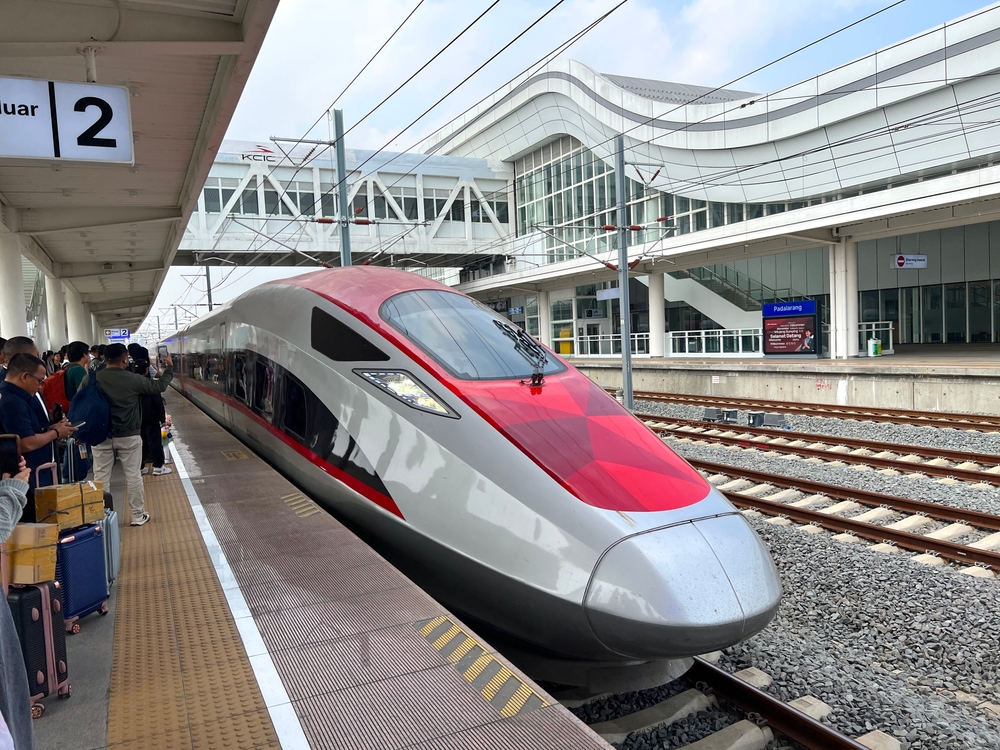
For PropertyGuru’s real estate news roundup, the Whoosh train has been able to save the Indonesian government trillions of rupiahs in fuel savings since it began operations last year. In other news, Malaysia’s property stocks remain in comeback mode. Lastly, residential buyers are ‘holding back’ because of the Philippines’ interest rate situation and inflation.
Indonesia’s high-speed rail contributes to fuel savings, local economy amid reports of losses by state firms: Minister
Amid reports that government-owned construction firms had suffered losses due to their involvement in Southeast Asia’s first high-speed rail project, Indonesia’s State-Owned Enterprises Minister Erick Thohir said that the Whoosh train has been able to save the government trillions of rupiahs in fuel savings since it began operations last year.
Not only does Whoosh cut the travelling time between Jakarta and Bandung, but Mr Erick stressed that it also uses energy more efficiently.
“By using electricity, the Jakarta-Bandung high-speed rail can save IDR3.2 trillion (USD197 million) per year in fuel (costs),” Mr Erick said in an Instagram post on Saturday (20th July), without elaborating on how the savings were calculated.
CNA reports that he made the statement when accompanying President Joko Widodo back to Jakarta from Bandung using Whoosh, the first high-speed rail in Southeast Asia built in collaboration with China.
Malaysia property stocks remain in comeback mode
Property stocks, which rallied over the past few months, were among the hardest-hit counters on Bursa Malaysia in the recent global equity rout. Investors rushed to take profits as market sentiment was shaken by external headwinds.
Still, the party has just started and is likely far from over given the fundamental reasons and undemanding valuation.
Despite an 18.9 percent year-to-date gain, the Bursa Malaysia Property Index, which tracks 98 property counters, is now trading at a price-to-book (P/B) of 0.61 times, a 10.8 percent discount against its 15-year averages, according to The Edge Malaysia’s computation.
‘Residential buyers holding back’ in the Philippines
The Philippine residential property sector saw a slight decline in total residential real estate loans (RRELs) in the first quarter of 2024, attributed to fewer project launches by developers and cautious buyer behaviour due to interest rates and inflation, according to Leechiu Property Consultants.
“The overall decline in loans can be attributed to both developers introducing fewer projects and buyers holding back on purchases because of the interest rate situation and inflation, which have been elevated for some time already,” Leechiu Director of Research Roy Amado L. Golez, Jr. told BusinessWorld via an e-mailed statement over the weekend.
The Property Report editors wrote this article. For more information, email: [email protected].
Recommended

Is China’s housing market finally turning a corner?
Shanghai’s property revival raises hopes, but falling prices elsewhere point to a long recovery
Opportunity or trap? What Washington’s high-tech hub outside Manila means for Philippine property
The New Clark City Economic Security Zone promises billions in investment, but at what cost to Philippine sovereignty?

What Japan’s policy rate hike means for its property market
After decades of near-free borrowing, the country's policy rate is starting to reshape the calculations behind property investment

A conversation with the head of Vietnam’s Green Building Council on the cost of doing nothing
The VGBC’s Douglas Snyder argues that the real cost developers should fear isn’t building green. It’s failing to do so