How 5G will affect Vietnam’s commercial real estate
To date, 5G networks have been tested in 16 provinces and cities
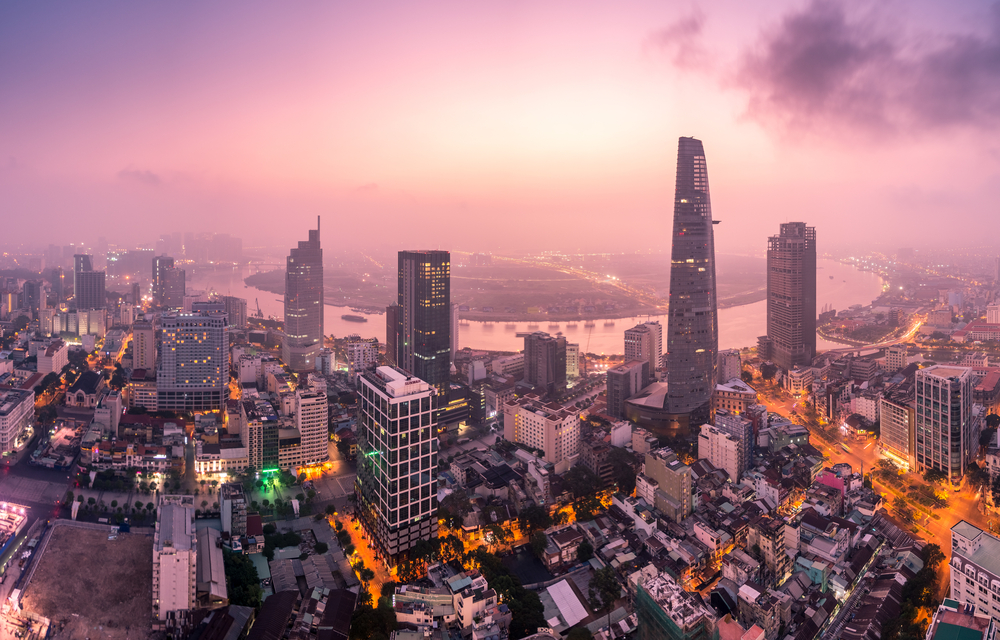
Vietnam’s recent digital economic development policies have been ambitious.
The value of some Vietnamese technology companies surged by about 200 percent on the Ho Chi Minh City Stock Exchange last year, indicating that the country’s digital technology economy is booming, according to Vietnam News.
Despite the country not yet entering into a formal digital economic agreement with any country, it is considering doing so in the near future. It is also undergoing a rapid transition at the macro and policy levels in order to establish a fast digital economy.
Experts said that 5G will be the new standard for commercial real estate this year. According to the Ministry of Information and Communications in Vietnam, telecom companies increased their investment in broadband infrastructure in 2021.
To date, 5G networks have been tested in 16 provinces and cities. The 4G network covers 99.8 percent of the population, and fibre optic networks are available in all communes and wards.
More: 5G, a breakthrough contributor to Vietnam’s economic growth
Trang Bui, General Manager, Cushman & Wakefield Vietnam stated: “For commercial real estates, real-time monitoring of assets could reduce operating costs and downtime, 5G can enable new pathways for productivity. The pandemic has shown the need to transform the way we work and collaborate, and 5G has the potential to be part of that transformation.”
“The 5G technology can do so much for commercial real estate. Whether through robots, cars, health devices, or retail, 5G will undoubtedly transform not only how we operate, but how we work, live, and play going forward,” he added.
It will affect commercial real estate in various ways, including healthcare, office space, smart cities, and smart homes.
Vietnam, like other countries, has experienced harsh challenges brought by the pandemic. However, it had a rapid vaccination policy, which helped vaccinate more than 80 percent of the population within six months.
The country’s expected GDP growth for 2022 is six to 6.5 percent with a USD3.900 per capita income.
The Property Report editors wrote this article. For more information, email: [email protected].
Recommended
Opportunity or trap? What Washington’s high-tech hub outside Manila means for Philippine property
The New Clark City Economic Security Zone promises billions in investment, but at what cost to Philippine sovereignty?

What Japan’s policy rate hike means for its property market
After decades of near-free borrowing, the country's policy rate is starting to reshape the calculations behind property investment

A conversation with the head of Vietnam’s Green Building Council on the cost of doing nothing
The VGBC’s Douglas Snyder argues that the real cost developers should fear isn’t building green. It’s failing to do so

These 6 projects are among Asia’s greenest in 2026
Proof that better buildings are defined as much by how they operate as how they look