Borders reopening contributed to Singapore’s economic growth in Q1, experts say
The city-state’s real estate market also saw a 21 percent annual increase in transactions of income-earning assets
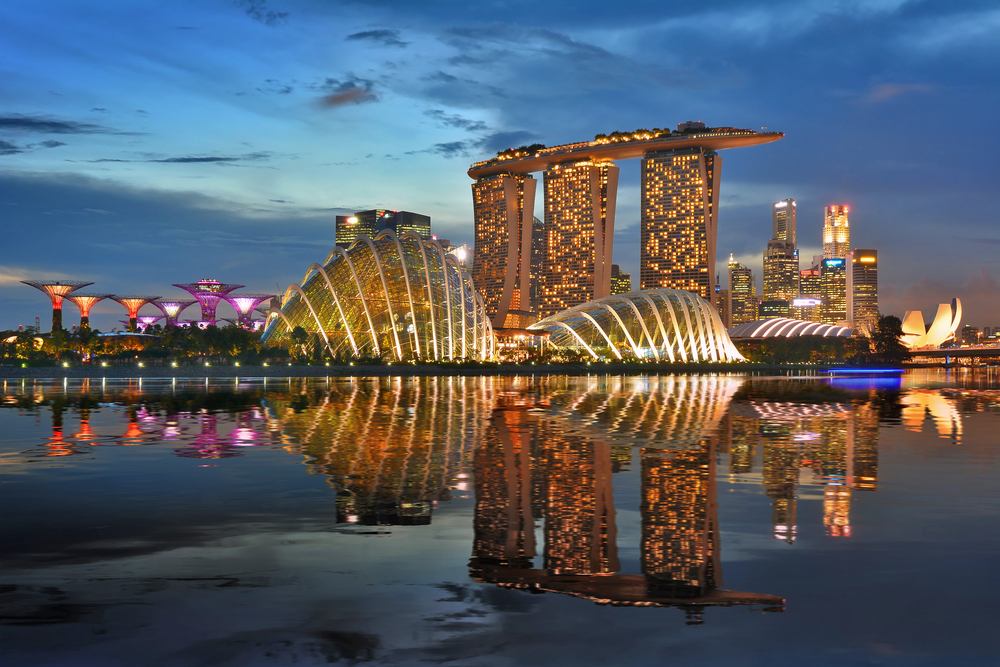
Singapore’s economy is expected to grow as global demand shifts to ASEAN countries, reported The Business Times. This is largely due to supply chain disruptions, geopolitical conflicts, and China’s zero-COVID policy.
The reopening of borders in Southeast Asia played a huge role in boosting Singapore’s economic growth during the first quarter, according to Chua Hak Bin, co-head of macro research at Maybank’s investment banking group, mentioned during the first day of Maybank’s Invest ASEAN conference.
Chua hopes that this momentum is sustained throughout the second quarter as well. He added that the country’s active involvement in global trade pacts such as the Regional Comprehensive Economic Partnership has helped the country to attract foreign investment.
More: Singapore’s 2022 economic outlook remains at 3–5%
Furthermore, the city-state’s real estate market saw a 21 percent annual increase in transactions of income-earning assets, the largest rating in the last 10 years, as reported by Mingtiandi.
“Singapore has been a magnet for cross-border investors in 2022, with offshore capital responsible for deals across the office, retail and industrial sectors. But it is the office sector where activity has been concentrated the most,” said David Green-Morgan, RCA real estate research head for Asia Pacific. “For the first time ever, Singapore was the most traded CBD office market in Asia Pacific in a single quarter, overtaking the likes of Tokyo, Sydney, and Seoul.”
Meanwhile, according to The Straits Times, private-sector analysts revised this year’s growth forecast based on the rise in inflation and slower economic activity in China.
According to the data released by the Monetary Authority of Singapore (MAS), this year’s economic growth will come in at 3.8 percent, which is lower than the previously set four percent. Despite this, the predicted GDP growth forecast remains at three percent.
Overall inflation for 2022 is now anticipated to reach five percent, up from 3.6 percent. It is, however, also predicted that both overall and core inflation will ease in 2023 — three percent and 2.8 percent, respectively.
The Property Report editors wrote this article. For more information, email: [email protected].
Recommended
Is China’s housing market finally turning a corner?
Shanghai’s property revival raises hopes, but falling prices elsewhere point to a long recovery
Opportunity or trap? What Washington’s high-tech hub outside Manila means for Philippine property
The New Clark City Economic Security Zone promises billions in investment, but at what cost to Philippine sovereignty?

What Japan’s policy rate hike means for its property market
After decades of near-free borrowing, the country's policy rate is starting to reshape the calculations behind property investment

A conversation with the head of Vietnam’s Green Building Council on the cost of doing nothing
The VGBC’s Douglas Snyder argues that the real cost developers should fear isn’t building green. It’s failing to do so