Bangkok office market slows due to shrinking demand
Tenants’ bargaining power to rise as large supply comes in the next five years
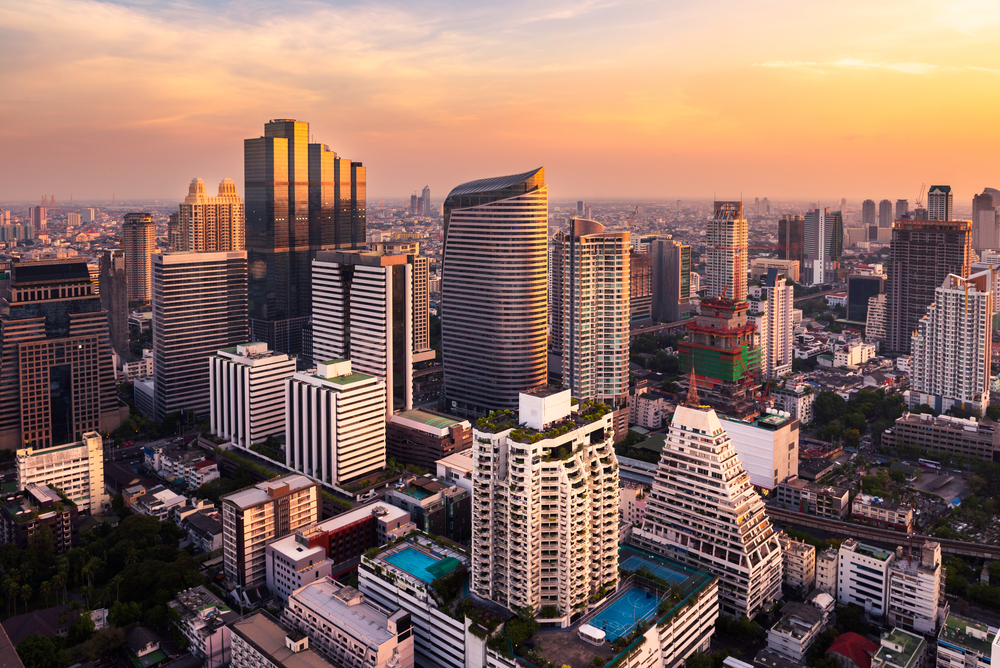
Diminishing demand and future supply are beating up Bangkok’s office market, as the sector expects plateau in rents and tenancy this year, reported Bangkok Post.
Teerawit Limthongsakul, managing director at Nexus Real Estate Advisory said, “the pandemic has been prolonged.”
Numerous office occupants have decided to cut costs by scaling down or halting their expansion plans.
“Apart from cost savings, demand tends to drop in the long term as working from home becomes a trend. The country is an ageing society with a shrinking working population,” he added.
The office market is also receiving a whopping estimated 1.8 million square metres of supply in the next five years, largely from big developments like WHA Building in Bang Na, One Bangkok near Lumpini Park, and One City Center on Ploenchit Road.
Teerawit said, “A large amount of supply will raise tenants’ bargaining power. With the slow recovery of the economy this year, rents may be flat and occupancy may be flat or drop.”
More: 2021 Thailand real estate market prospects
In Q4 2020, office occupancy rate was high at 91 percent, but the number dropped from 94 percent in 2019. Total office space at the end of 2020 was 6.2 million square metres with approximately 130,000 sqm added during the year.
Wuttiphon Taworntawat, managing director of commercial developer UHG, mentioned that multiple tenants reduced office employment by 25 percent.
He added that working from home wouldn’t strongly impact future office demand, since many Thai firms saw productivity drop.
As stated by Cushman & Wakefield, partner of Nexus and US-based commercial real estate services firm, working from home arrangements aren’t favoured in Asia. In the following 10 years, the growth rate of work from home is expected to increase only from 2.6 to 5.2 percent.
“Growth will be gradual as many companies in Thailand need more time to adjust. Working from home is inconvenient for some Thai sectors that would prefer semi-permanent working from home,” said Teerawit.
Recommended
Timor-Leste real estate takes off as nation joins ASEAN
Early signs of a property market emerge amid land-title reform and cautious foreign interest

Macau market weakness persists despite economic rebound signs
As Macau’s gaming revenues surge back to life, its residential property market remains stuck on a losing streak
Seoul’s luxury homes roar back on global demand and scarcity
Once cooled by demographics and policy, the South Korean capital's luxury housing market is surging again
South Asia’s property markets edge back from the brink
After years of turmoil, South Asia’s real estate sectors are stirring back to life, buoyed by reform and renewed investor confidence