Niseko’s property boom is a hotel story in disguise
Residential supply jumped 27.6% this year, but strip out one hotel branded residence and the market barely moved. C9 Hotelworks’ latest research shows where the real demand and opportunity now sit
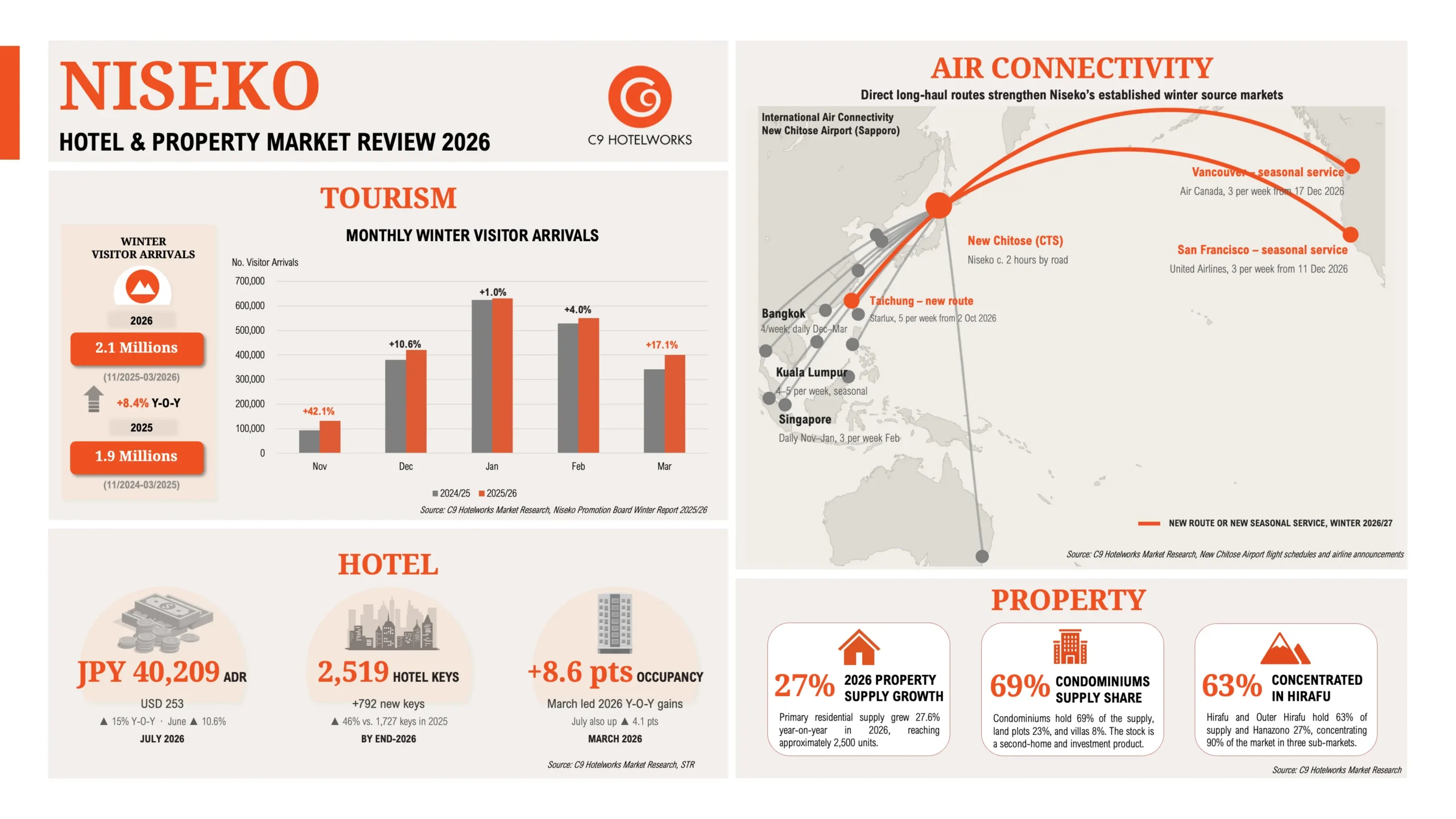
Headline numbers flatter Niseko. Residential supply in Japan’s best-known ski resort rose 27.6% in 2026 to approximately 2,500 units, the strongest annual increase since 2023 and the highest level in nine years. Read quickly, that looks like a developer stampede. Read closely, it is something else.
According to C9 Hotelworks’ Niseko Tourism & Property Market Review 2026, a single project accounts for close to nine in ten of the units added this year. Hotel101 Niseko, a 482-key hotel branded residence in Outer Hirafu, is the surge. Strip it out and primary supply grew by less than 3%, following a 0.6% decline in 2025. Niseko is not overbuilding. It is hotelizing.
That distinction matters for buyers. The market remains condominium-led at 69% of supply, with land plots at 23% and villas at just 8%. Geography is equally tight, with Hirafu, Outer Hirafu and Hanazono holding 90% of stock. Scarcity in villas and land is intact. Competition will be felt in condominiums.
Related: Luxury residential growth accelerates in Niseko as tourism fuels demand
The demand underneath is solid. Winter visitor arrivals across Kutchan, Niseko and Rankoshi rose 8.4% to 2.14 million in the 2025/26 season. More telling for property is how long guests stay. Some 87.6% of international overnight guests stay four nights or more, and the share staying eight nights or longer climbed to 24.5%. Long-stay visitors behave like future owners. They rent a home, learn the village and come back. That is the funnel every second-home market is built on.
The source mix is shifting as well. The United States is now Niseko’s largest international market by overnight guests, with 40,504 guests, up 15.2% and ahead of Australia and Hong Kong. From December, United Airlines from San Francisco and Air Canada from Vancouver add direct seasonal flights into New Chitose. Better access from North America widens the buyer pool at the top end.
The hotel market is where caution belongs. Moxy Niseko Village and Hotel101 add 792 keys between them, lifting hotel supply 46% in twelve months to 2,519 keys by end-2026. Occupancy gains sat in the shoulder months, not the peak, led by March at 8.6 points. ADR fell 4% in January while June and July rose 10.6% and 15%. The peak is not repricing. With this much new supply, summer and shoulder demand, led by domestic Japanese travelers, is now commercially necessary, not optional.
For owners who depend on rental programs, that is the variable to watch. More hotel keys chasing the same January guest puts pressure on rental returns unless green-season occupancy keeps building.
The pipeline confirms the direction of travel. Six hotel residences projects totaling 290 units are scheduled between 2027 and 2030, including The Chedi and Hoshinoya. Hotel residences are the largest residential product type in the pipeline. Capital is following brands, services and year-round operations rather than standalone apartments.
Niseko’s next chapter will be defined less by how much gets built than by what is attached to it. Buyers chasing the 27.6% headline are reading the wrong number. The one that counts is 24.5%, the guests who already stay long enough to want to own.
About Bill Barnett
 Bill Barnett — a globally recognised hospitality, tourism, and real estate advisor — is the founder and managing director of Asia-based C9 Hotelworks and esteemed member of the PropertyGuru Asia Property Awards (Greater Niseko) Judging Panel.
In addition to being a leading consultant, he is a frequent speaker at industry events and conferences. With over 30 years’ experience in the Asia Pacific region, he has an extensive background in hotel operations, development, and asset management. His past employment highlights include Senior Corporate roles at international hotel chains and publically listed companies. Bill is considered to be one of the foremost industry experts in the hotel residences sector. To date, Bill is the author of four books on travel, property, and hospitality under the titles of Slave to the Bean, Collective Swag, It Might Get Weird and Last Call.
Recommended
Gulf property markets trade panic for prudence
War upends West Asia, but property markets from Dubai to Riyadh refuse to break and attempt to regain their footing
Is China’s housing market finally turning a corner?
Shanghai’s property revival raises hopes, but falling prices elsewhere point to a long recovery
Opportunity or trap? What Washington’s high-tech hub outside Manila means for Philippine property
The New Clark City Economic Security Zone promises billions in investment, but at what cost to Philippine sovereignty?
What Japan’s policy rate hike means for its property market
After decades of near-free borrowing, the country's policy rate is starting to reshape the calculations behind property investment