5 lessons from TGRE26 that matter in a decade of climate risk
Bangkok’s green real estate summit delivers insights on building for 2050, today
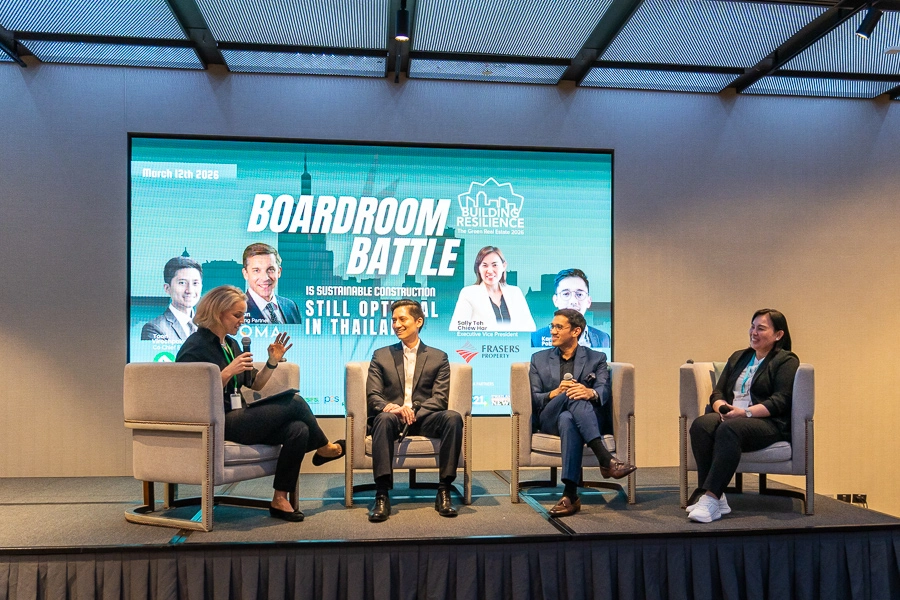
When Green Building Consulting & Engineering (GBCE) announced the fifth edition of The Green Real Estate Summit (TGRE26) in late February, they posed a stark question: Will your buildings compete, or become obsolete, in a climate-constrained decade?
The answer has become unmistakably clear since the 12 March summit. With more than 100 developers, investors, architects, engineers, bankers, and sustainability leaders in attendance, TGRE26 confirmed that resilience is a financial hedge.
As Thailand’s Climate Change Act moves toward binding emissions obligations and LEED v5 becoming the only applicable certification version from July, the window for passive discussion has closed.
Lesson 1: The buildings that survive the next decade won’t be the newest. They’ll be the most resilient.
As Green Building Consulting & Engineering CEO Armelle Le Bihan reminded the audience: “The buildings we design today will still be operating in 2050, in a world very different from the one they were designed for.” Floods, heat stress, and coastal exposure are already reshaping site selection, operating costs, and insurability across Southeast Asia.
Lesson 2: Regulation and finance are accelerating change.
Thailand’s Climate Change Act and the Thailand Taxonomy are widening access to green finance. Stranded assets, loss of financing, and non-compliance are becoming real costs. Verified low-carbon and resilient buildings are better positioned to attract capital, according to Sai Balaji, sustainability consultant at Green Building Consulting & Engineering.
Lesson 3: LEED v5 is now a compliance deadline.
From 1 July, LEED v5 will be introducing stronger demands on live building data, carbon emissions tracking, indoor air quality metrics, Environmental Product Declarations, and lifecycle assessments. Resilience will therefore become a core priority for both new and existing buildings.
Lesson 4: Thailand’s data centre ambitions depend on power and water.
As AI-driven workloads surge, reliable electricity and sufficient cooling water are chief constraints. Operators increasingly turn to solar power and Renewable Energy Certificates. Thailand could follow Malaysia’s model as a regional data centre hub, but only if clean energy keeps pace.
Lesson 5: The split incentive problem remains unresolved.
Residential projects still struggle because developers and buyers don’t share sustainability costs. Offices and industrial buildings show clearer returns. As a TGRE26 panel concluded: “Awareness does not always translate into willingness to pay. Regulation may need to lead.”
With Singapore moving toward mandatory green certification, the defining question from TGRE26 has gone from hypothesis to a confronting reality. The climate-constrained decade has arrived, and building for tomorrow starts today.
Recommended
A conversation with the head of Vietnam’s Green Building Council on the cost of doing nothing
The VGBC’s Douglas Snyder argues that the real cost developers should fear isn’t building green. It’s failing to do so

These 6 projects are among Asia’s greenest in 2026
Proof that better buildings are defined as much by how they operate as how they look
Indonesia’s property market feels the pinch of a reeling rupiah
As Jakarta tightens its grip on strategic minerals, investors are fleeing, leaving the property sector in limbo
Japan’s cities boom as rural towns hollow out
Millions of homes sit abandoned as the forces reshaping Japan's property market pull in opposite directions