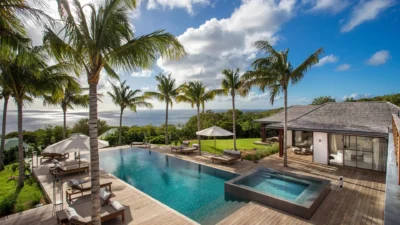
Koh Samui’s $822M residential market: How the island is evolving beyond luxury villas
Koh Samui’s property market is diversifying, with condominiums leading the shift from luxury villas
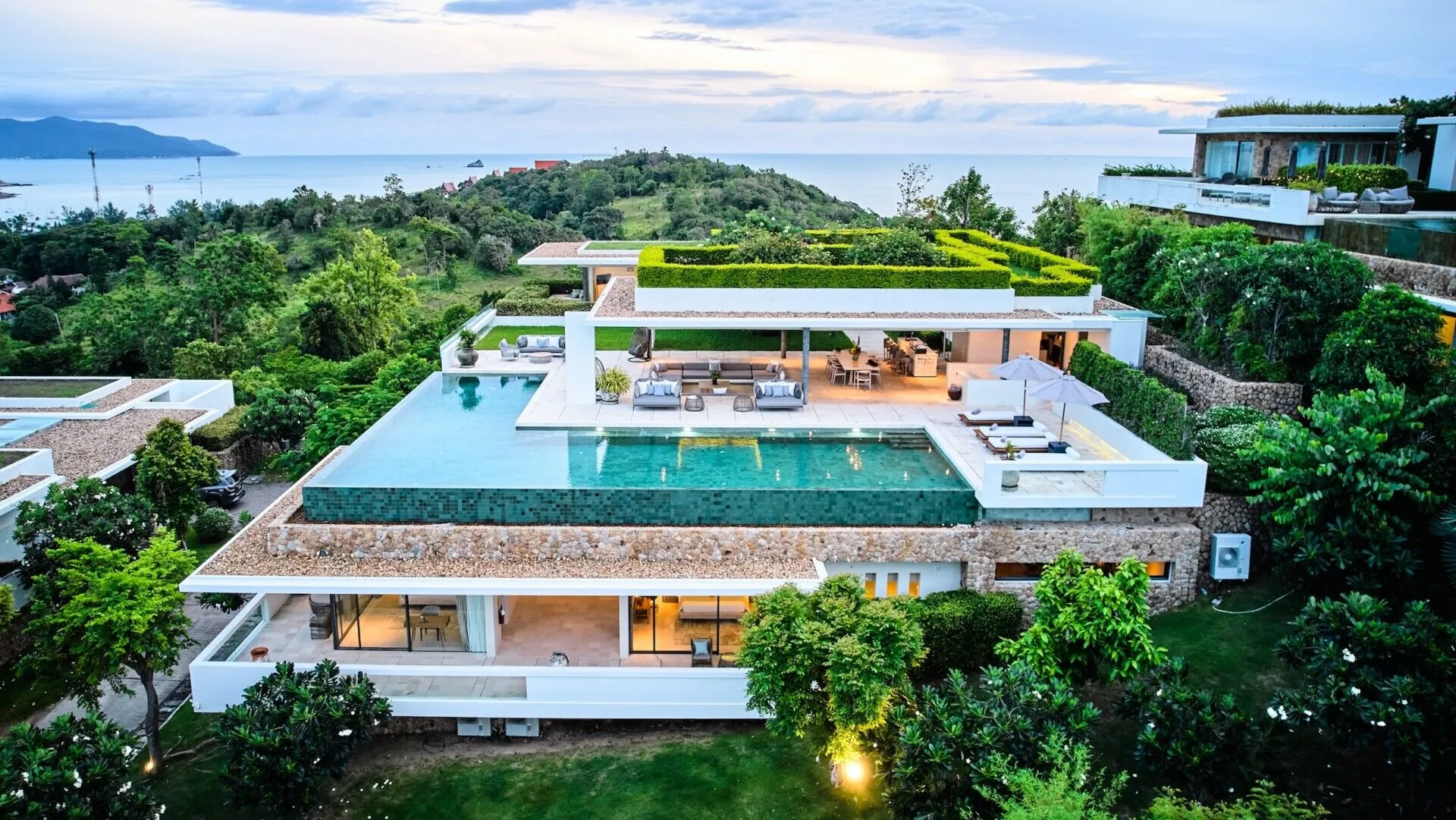
Koh Samui’s property sector is undergoing a dynamic transformation, as the island’s total primary residential market value hits THB30.3 billion (USD822 million) according to the C9 Hotelworks Samui Property Market Review 2025. Traditionally known for its luxury villas catering to high-net-worth individuals, the island’s property landscape is broadening to meet changing demand patterns and an increasingly global clientele.
Rising supply reshapes the market
As of early 2025, Koh Samui’s primary property market includes 2,882 units across 117 projects. The majority of these are concentrated in the northern and eastern submarkets—most notably Bo Phut, which accounts for 70 percent of supply by number of units. Other notable areas include Maret (15 percent), Mae Nam (nine percent), and Ang Thong (three percent).
Geographically, these submarkets dominate not just by volume but also in terms of market value, contributing 85 percent of the island’s total residential market worth. The sharp concentration of inventory highlights how certain locales continue to define the island’s real estate appeal, particularly among international buyers.
Condominium boom drives diversification
While Koh Samui’s real estate identity has long been associated with small-scale, luxury villa estates like The Estates Samui and Samujana, the market is evolving. Developers are introducing large-scale, high-density condominium projects—an emerging trend driven by increasing global exposure and higher international arrivals.
The island’s transformation is also supported by several PropertyGuru Thailand Property Award-winning developments, which have significantly contributed to Samui’s growth as a sought-after investment destination.
Key developments now under construction include Anava Samui (564 units) and Wing Samui (533 units), which collectively signal a shift towards more affordable, investment-oriented property options. Condominiums now comprise 52 percent of the total market supply, with 1,513 units on offer.
This marks a notable departure from the villa-dominated supply of previous years. Today’s diversified inventory is broadening Samui’s buyer pool to include mid-tier investors and lifestyle purchasers seeking both capital appreciation and rental yields.
Pricing snapshot: Condominiums vs. villas
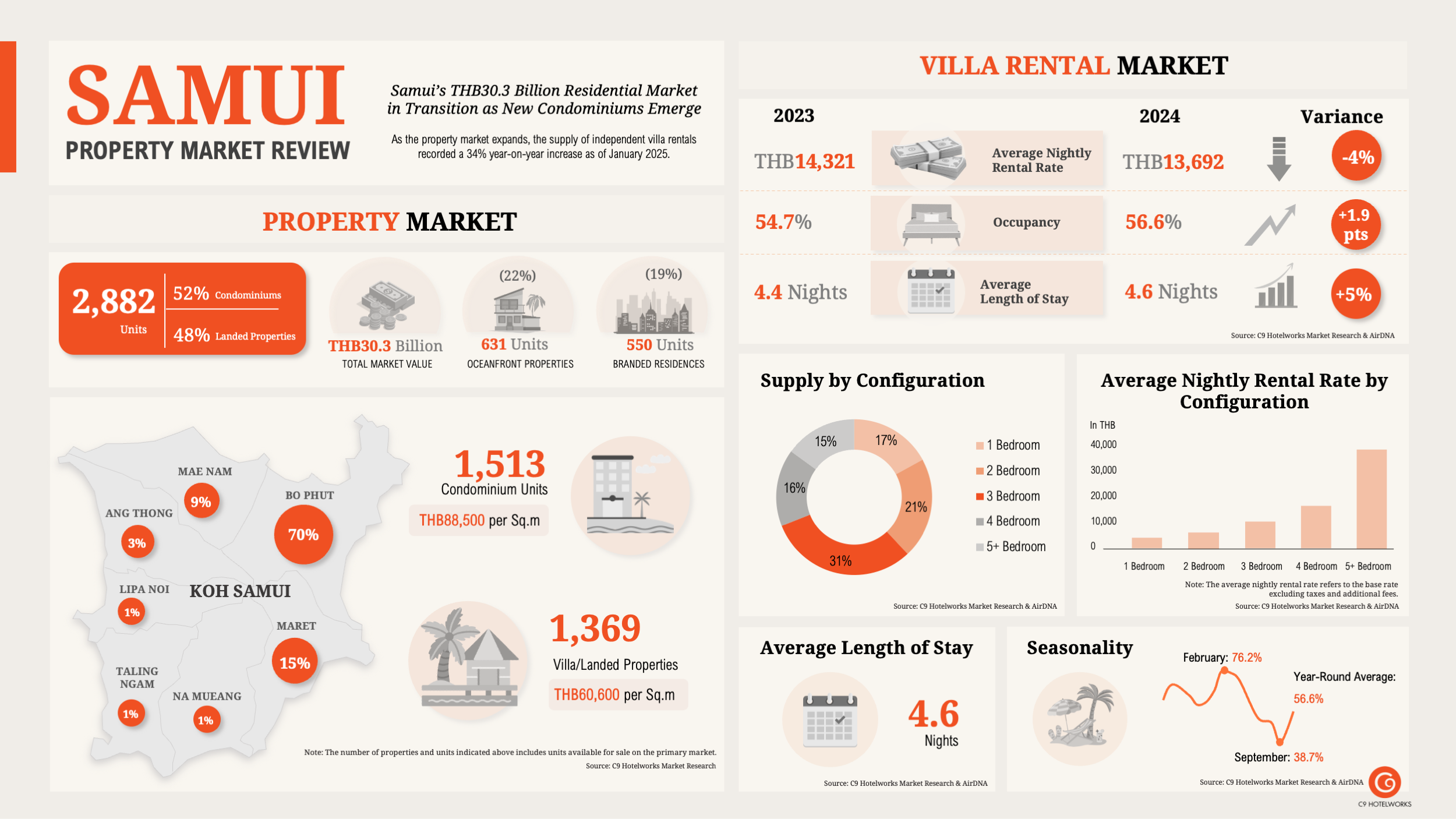
Across the condominium segment, the median sales price stands at THB88,500 per square metre (USD2,400). Entry-level buyers can expect to pay THB3.5 million (USD95,000) for a one-bedroom unit (40–70 sqm), while a two-bedroom unit (80–110 sqm) typically costs THB7.2 million (USD196,000).
In contrast, landed properties—including Samui’s signature villas—are priced at a median of THB60,600 per sqm (USD1,650). A standard three-bedroom villa (250–350 sqm) commands an average price of THB14.9 million (USD406,000). These larger residences remain a key draw for affluent buyers seeking privacy, exclusivity, and direct income potential through short-term rentals.
Villa rental market: Balancing supply and demand
One of the island’s most distinctive real estate dynamics is its independent villa rental market, which caters to Koh Samui’s well-heeled tourist demographic. As of January 2025, the number of villa rental properties surged by 34 percent year-on-year, bringing the total supply to 3,055 properties.
This sharp uptick has intensified price competition. The average nightly rental rate fell by 11 percent in Q1 2025 to THB13,012 (USD353), down from THB14,321 (USD388) a year earlier. However, higher affordability has led to improved occupancy, which rose 5.7 percentage points to 71.5 percent over the same period.
Despite the softness in rental pricing, the villa market remains robust, buoyed by Samui’s positioning as a premier resort destination. The island attracts a more affluent visitor base than other Thai beach markets like Phuket or Pattaya, with an average length of stay of 4.6 nights. This sustained demand supports ongoing investor interest in income-generating holiday homes.
Key trends and outlook
Koh Samui’s property market is clearly in transition. The rapid expansion of condominium supply is reshaping the island’s traditional villa-centric profile. Developers are also extending their focus beyond Bo Phut into neighboring areas like Maret and Mae Nam, which are seeing accelerated growth.
Importantly, this evolution reflects broader shifts in buyer demographics and travel patterns. International arrivals continue to rebound post-pandemic, supported by enhanced air connectivity and a global appetite for experiential, destination-led lifestyles.
However, as inventory continues to rise—especially in the villa rental segment—investors must remain attuned to pricing pressures and seasonal fluctuations. The high season peaks in February (76.2 percent occupancy), but occupancy can dip as low as 38.7 percent in the off-season month of September.
Final word
For buyers, developers, and investors, the THB30.3 billion (USD822 million) Koh Samui residential market offers both opportunities and challenges. The island’s evolving product mix is creating entry points for a more diverse investor base, while seasoned players will continue to leverage Samui’s enduring appeal as a world-class lifestyle destination.
As the market matures, success will hinge on smart project positioning, compelling value propositions, and a deep understanding of shifting demand dynamics. Whether you are a first-time buyer or a seasoned developer, Koh Samui remains one of Asia’s most fascinating property plays in 2025.
About Bill Barnett
 Bill Barnett — a globally recognised hospitality, tourism, and real estate advisor — is the founder and managing director of Asia-based C9 Hotelworks and esteemed member of the PropertyGuru Asia Property Awards (Greater Niseko) Judging Panel.
In addition to being a leading consultant, he is a frequent speaker at industry events and conferences. With over 30 years’ experience in the Asia Pacific region, he has an extensive background in hotel operations, development, and asset management. His past employment highlights include Senior Corporate roles at international hotel chains and publically listed companies. Bill is considered to be one of the foremost industry experts in the hotel residences sector. To date, Bill is the author of four books on travel, property, and hospitality under the titles of Slave to the Bean, Collective Swag, It Might Get Weird and Last Call.
For more information, email: [email protected].
Recommended

Foreign demand recalibrates in Southeast Asia housing markets
Even amid global headwinds, Southeast Asia’s property markets hold appeal for foreign buyers
Tariffs and turmoil test Singapore homes as suburbs hold firm
Foreign levies, regional wars, and buyer fatigue are putting pressure on the city-state’s housing market

Gulf luxury markets lure global capital amid policy shift
Gulf nations are shaking off a reputation for overt bling to lead a post-pandemic luxury boom
China housing slump deepens as oversupply drags prices
Concerns remain over surplus inventory built by troubled property developers as prices continue to fall across all but a handful of major cities